Hinged belt conveyor
The all-rounder for your material transport
Our hinged belt conveyors offer a reliable solution for material transport in many industrial processes. With a robust design and flexible customization options, they ensure efficient workflows and are characterized by a long service life.
Metal processing
◆
Recycling
◆
Automotive production
◆
Mechanical engineering
◆
Energy generation
Overview
Product description of the hinged belt conveyor
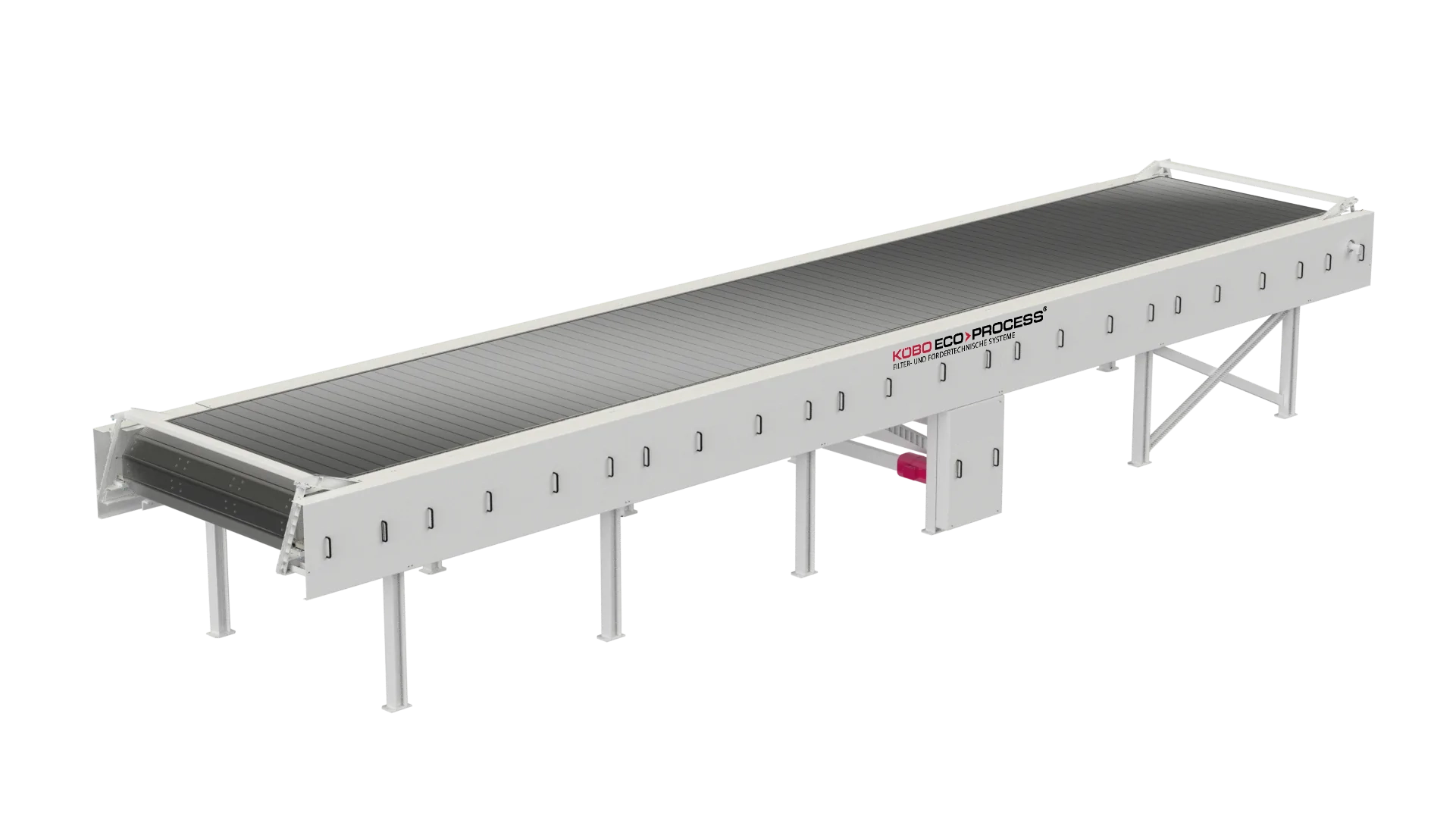
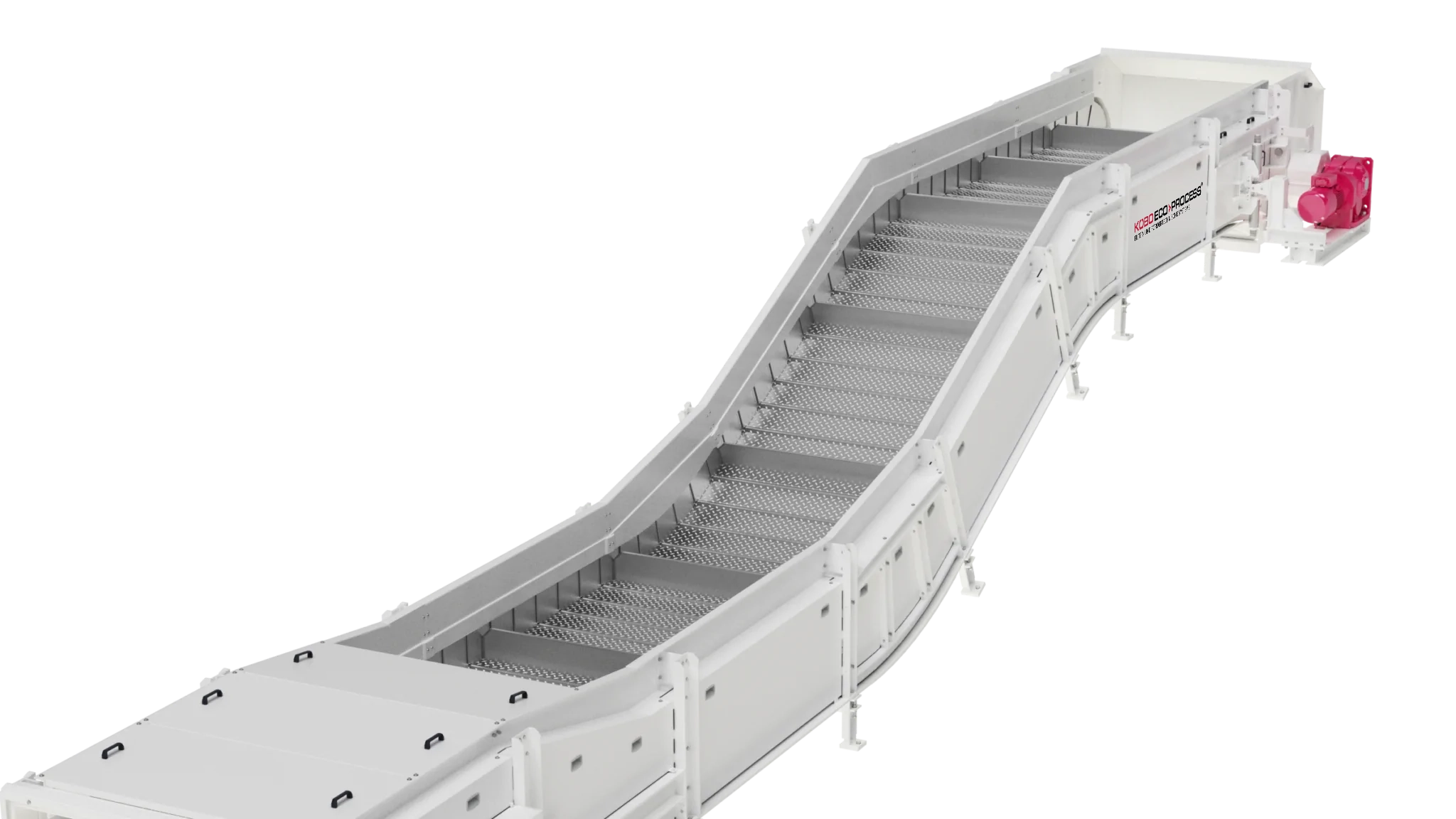
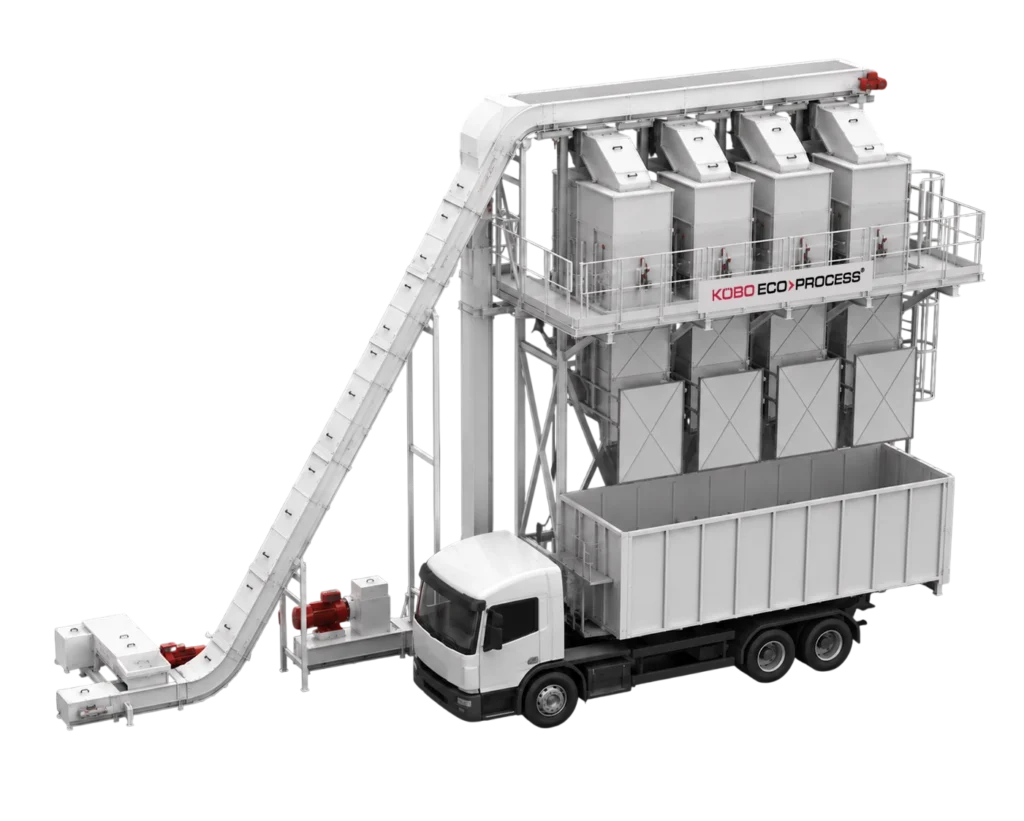
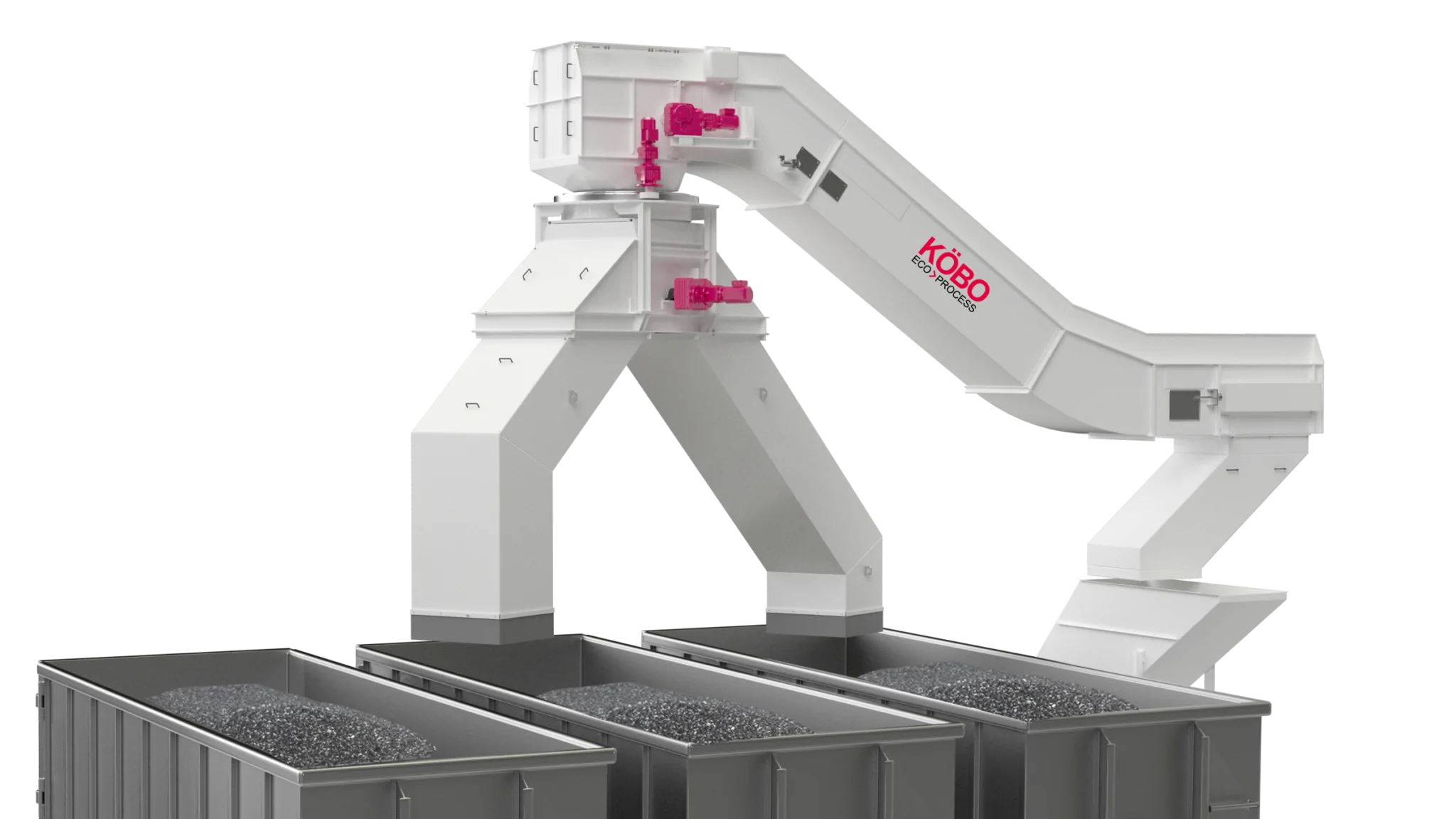
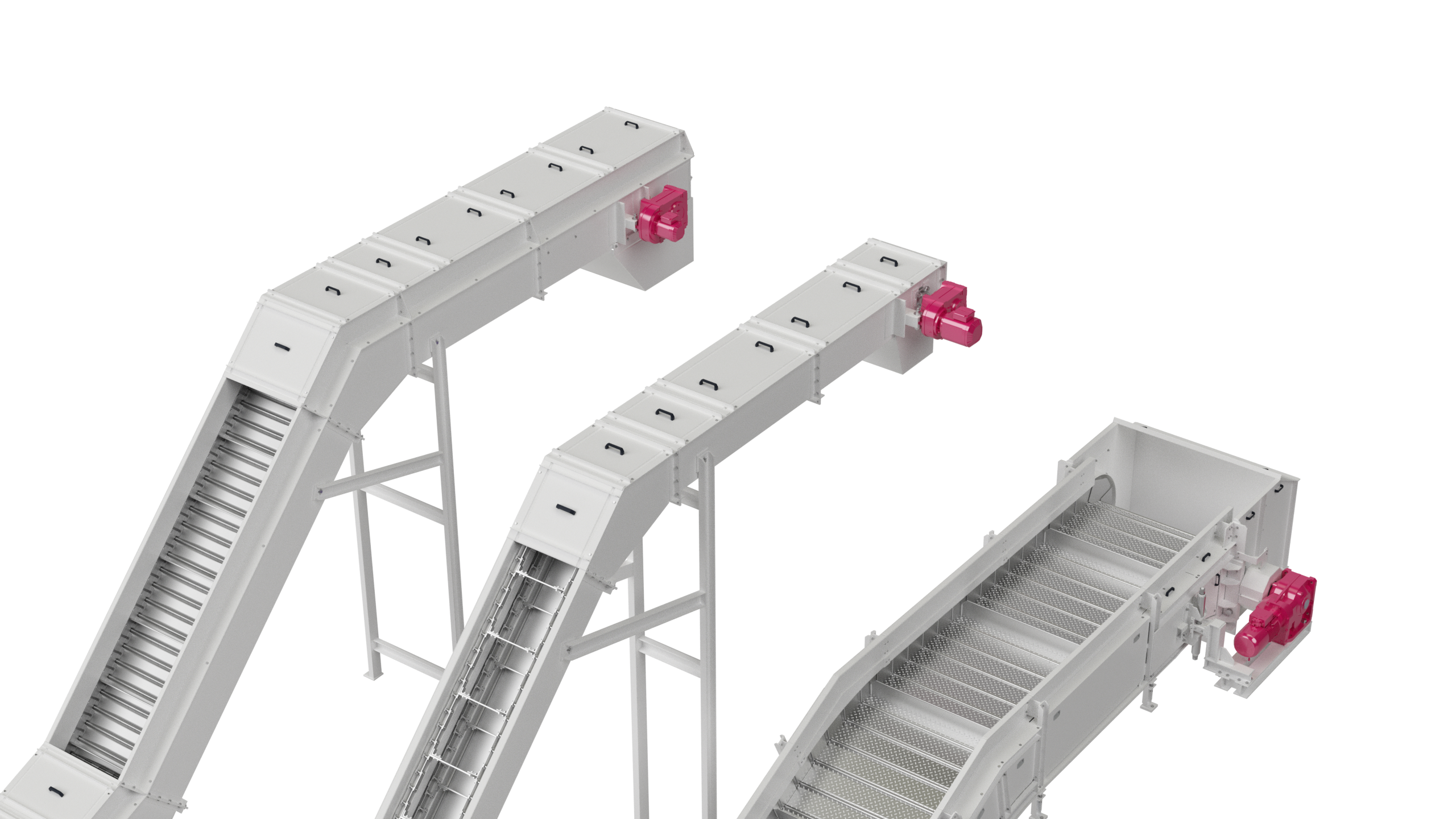
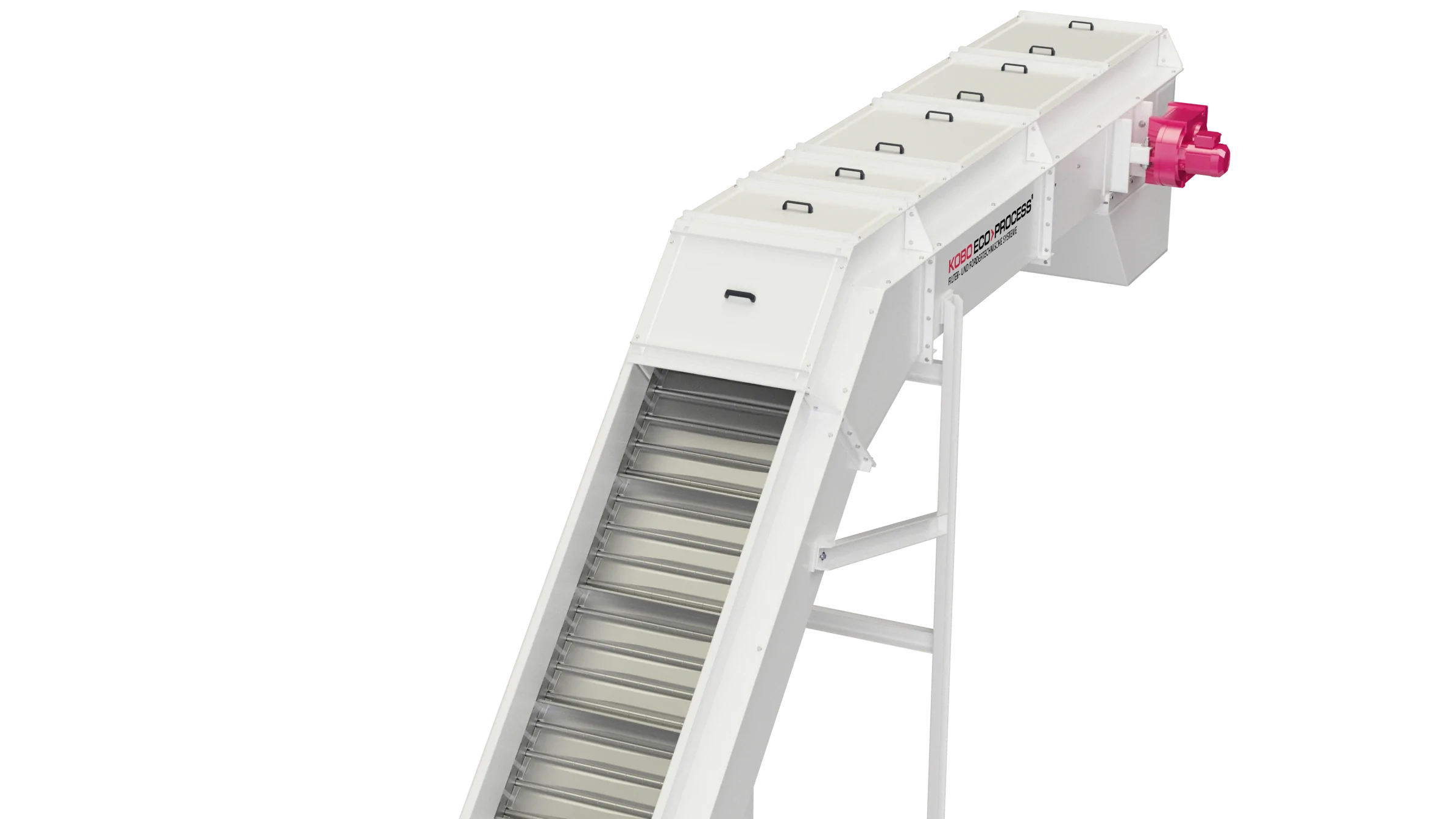
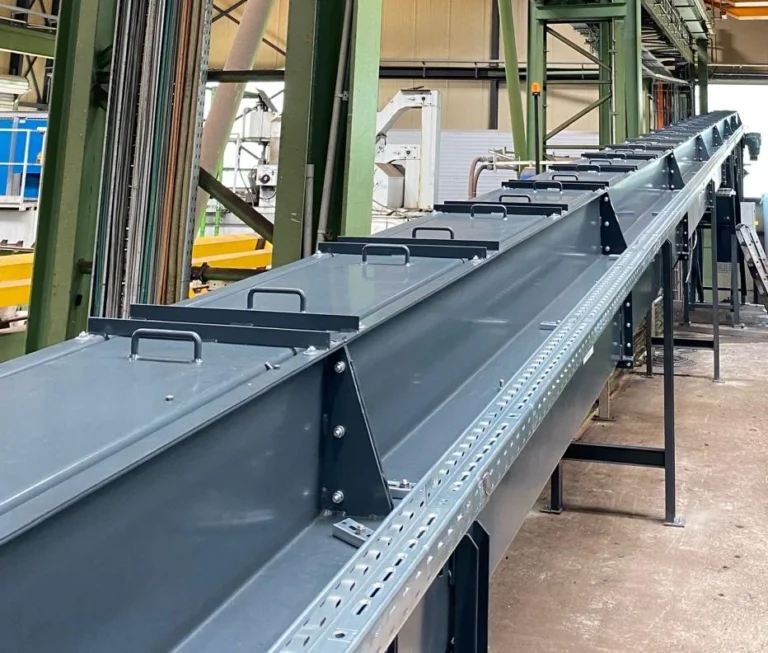
Hinged belt conveyors are ideal for transporting large quantities and for covering long distances. They exist as individual conveyors or as a complex conveyor system for fully automatic operation. The design is based on movable steel plates that are connected with conveyor chains. Thanks to their flexibility and adaptability, hinged belt conveyors are used in numerous industries where an efficient and reliable material flow is required. Thanks to their robust design, hinged belt conveyors are versatile and help to transport material efficiently and safely - even under demanding conditions.
Request now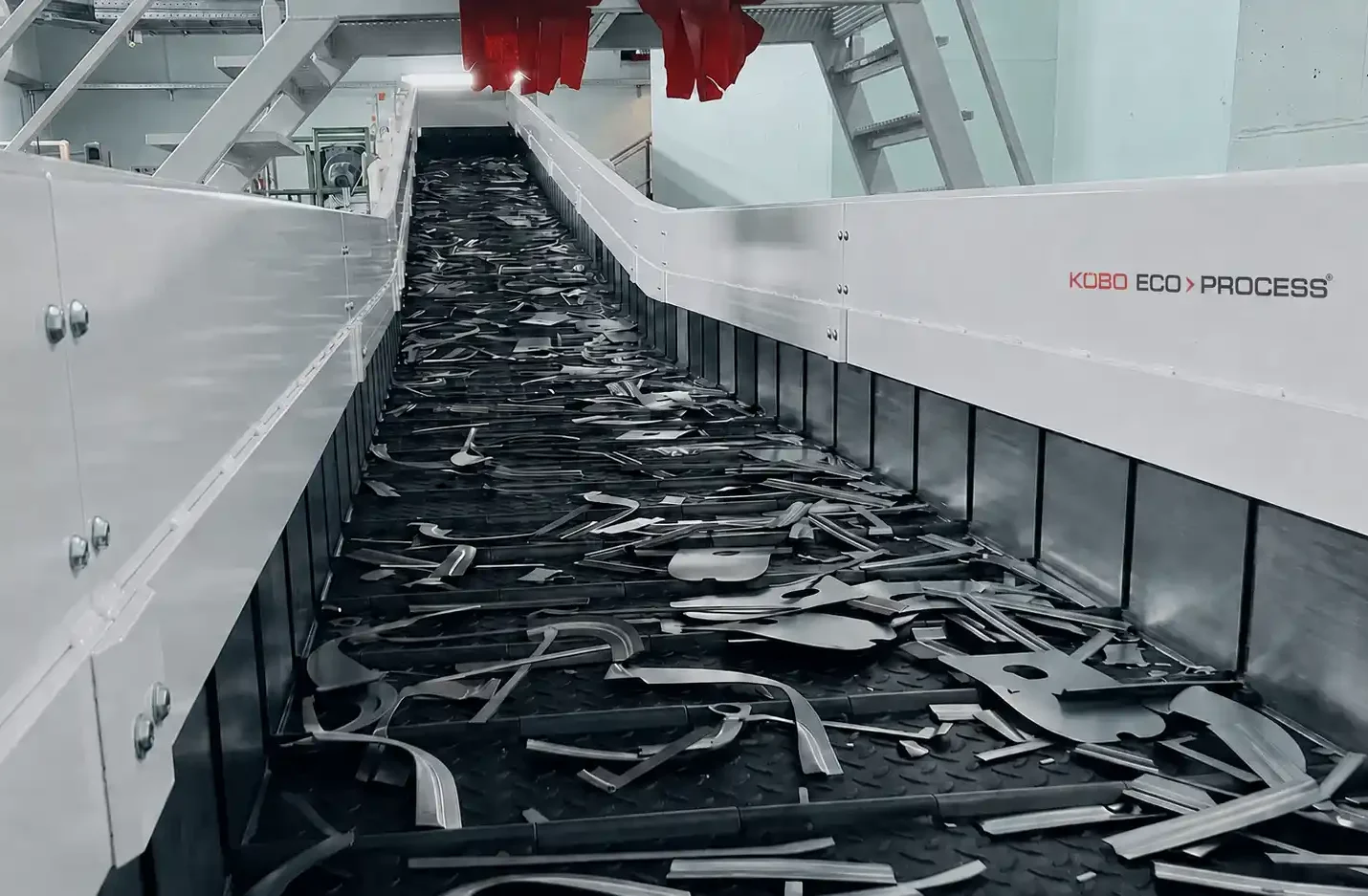
Construction & function
Structure
➔
Standardized conveyor cross-sections with variable usable width
➔
Special conveyor chains with rollers or flanged rollers
➔
Horizontal or ascending design
➔
Transfer of conveyed goods via chutes
➔
Drive via shaft-mounted geared motor
➔
Floor mounting or ceiling mounting possible
Functionality
➔
Material is transported via hinged plates that are moved by two conveyor chains
➔
Hinge plates made of individual metal plates, flexibly assembled using chain rods
➔
Hinged plates connected via two external chain strands
➔
The conveyor chains are driven by sprockets
➔
Conveyor speed infinitely adjustable via frequency converter
Materials
Common conveyed goods
➔
Chips with or without cooling lubricant, both in tuft form and crushed
➔
Cold and hot forged parts
➔
Garbage and other waste
➔
Wood processing (sawing, milling)
➔
Plastics processing, large-scale processing machines
➔
Punching waste such as sheet metal or slugs
➔
Bulk materials in various forms
➔
Transport of components (feed or discharge to processing machine)
➔
Processing of composite materials (milling)
Industries
Exemplary areas of application
➔
Metal processing: Transportation of metal chips and punching waste for further processing or disposal in production lines.
➔
Recycling: Handling and sorting of bulk materials such as metals, plastics or glass for recycling.
➔
Automotive production: transportation of production waste and residual materials from manufacturing processes.
➔
Mechanical engineering: Removal of workpieces and production residues from machining centers.
➔
Energy generation: Extraction of biomass or residues in power plant processes for further processing.
➔
Chemical industry: Safe movement of chemical bulk goods or production waste in special processes.
➔
Heavy-duty and high-temperature applications: Transportation of hot, sharp-edged or oily products using robust steel chains for demanding industrial processes.
Specifications
Technical data
Conveyed goods
Short chips, long chips, chip clusters, fine sheet metal scrap, punched parts and other bulk materials
Width/usable width [mm]
100 - 1,100 (also wider on request)
Length [m]
Max. 100 per conveyor
Pitch angle
30°, 45°, 60° (can be individually modified on customer request)
Hinge plate thickness
1.5 - 5 (individually also in larger sheet thicknesses)
Panel types
Tear plate, trough plate, plate made of smooth sheet metal, wire belt strap
Hinge plate spacing
38.1, 63, 125 or 160 mm
Drive
Shaft-mounted geared motor
Mounting types
Floor mounting or ceiling mounting possible
Advantages of the hinged belt conveyor from KÖBO ECO>PROCESS
Robustness and durability
High-quality materials and wear-resistant designs guarantee a long service life and reliable operation, even under high loads.
Adaptability
The modular design enables individual adjustments to be made to the width, length and incline angle in order to optimally meet different requirements.
High conveying capacity
Hinged belt conveyors transport large quantities of material continuously and efficiently, which speeds up production processes.
Ease of maintenance
Simple designs and freely accessible support plates minimize maintenance work and reduce downtimes.
Cost efficiency
Optimized work processes, less wear and low operating costs create long-term savings and increase profitability.
Comprehensive service
From planning and design to installation and maintenance, we are with you every step of the way.
Customized solutions
We develop hinged belt conveyors that are precisely tailored to your individual requirements.
Sounds good?
We will be happy to advise you on all questions relating to apron conveyors.
Plate types
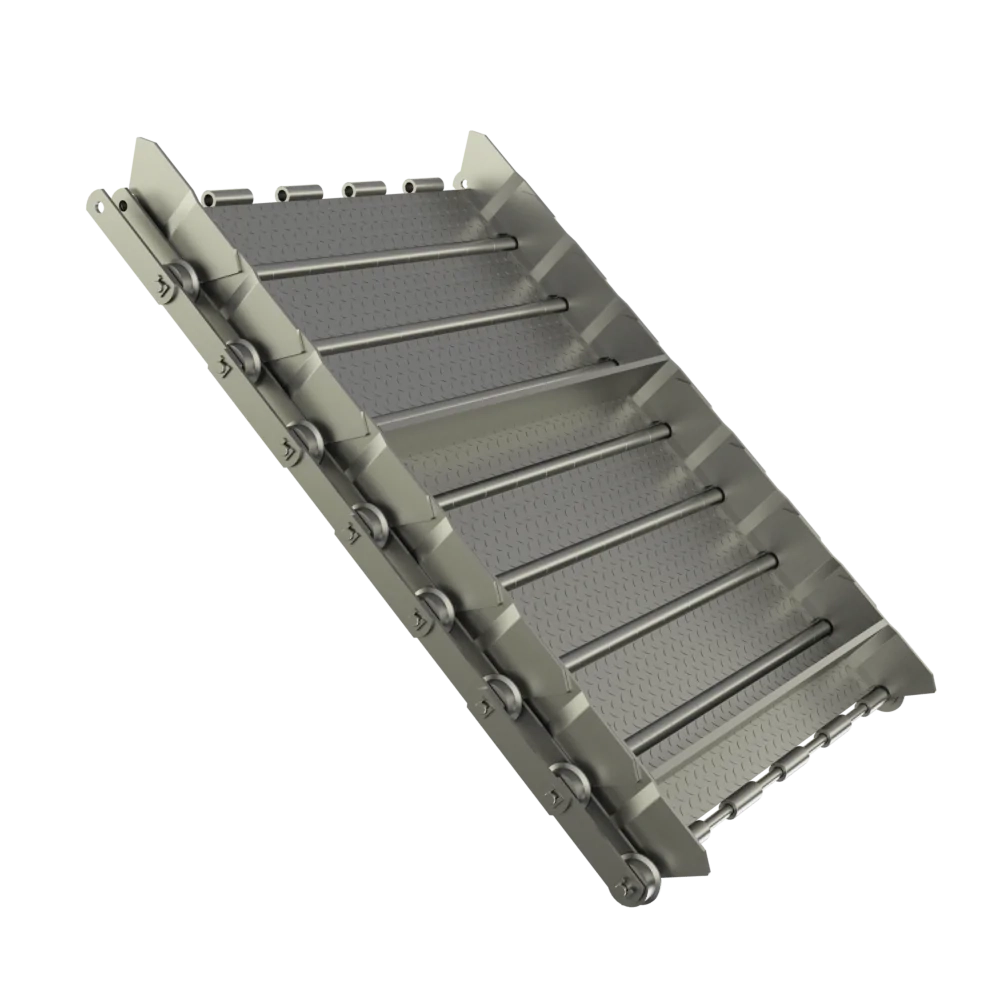
Tear plate
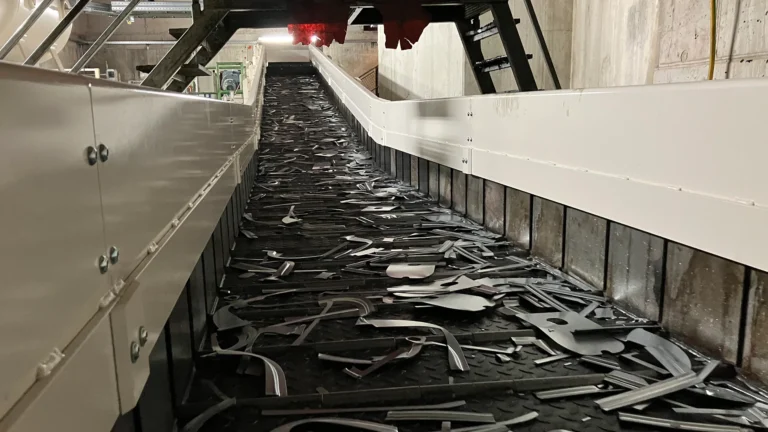
The tear plate is used to transport sheet metal scrap or punching waste. Their rough surface effectively prevents small slugs from sticking to the hinge plates due to oil residue.
As an alternative to the tear plate, dimpled or humped smooth sheet metal can also be used.
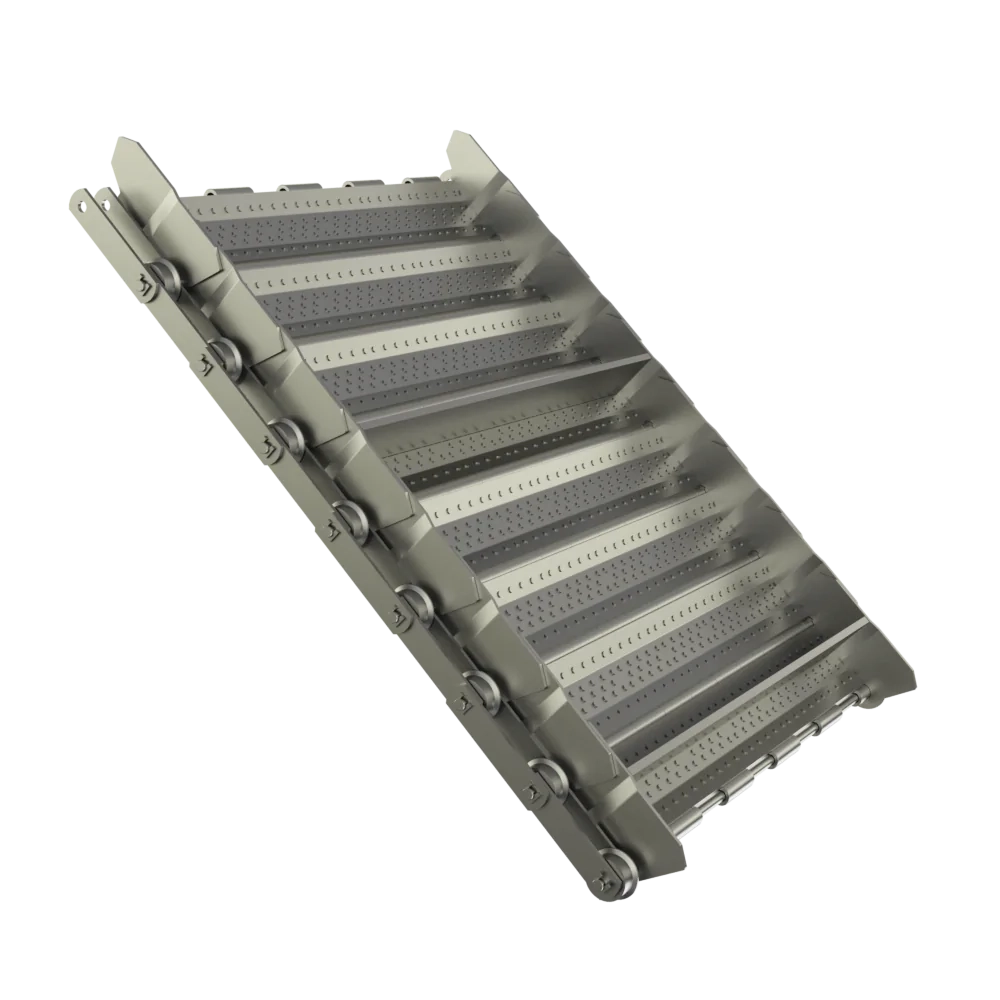
Trough-shaped plate
Thanks to its trough-shaped design, the trough plate is statically more stable than a conventional hinged plate. The option of adjusting the gap between the sheet metal and the tubular sleeve enables an optimum configuration. Due to the strict requirements for the gap clearance, the troughed plate is also the preferred choice for transporting punching waste.
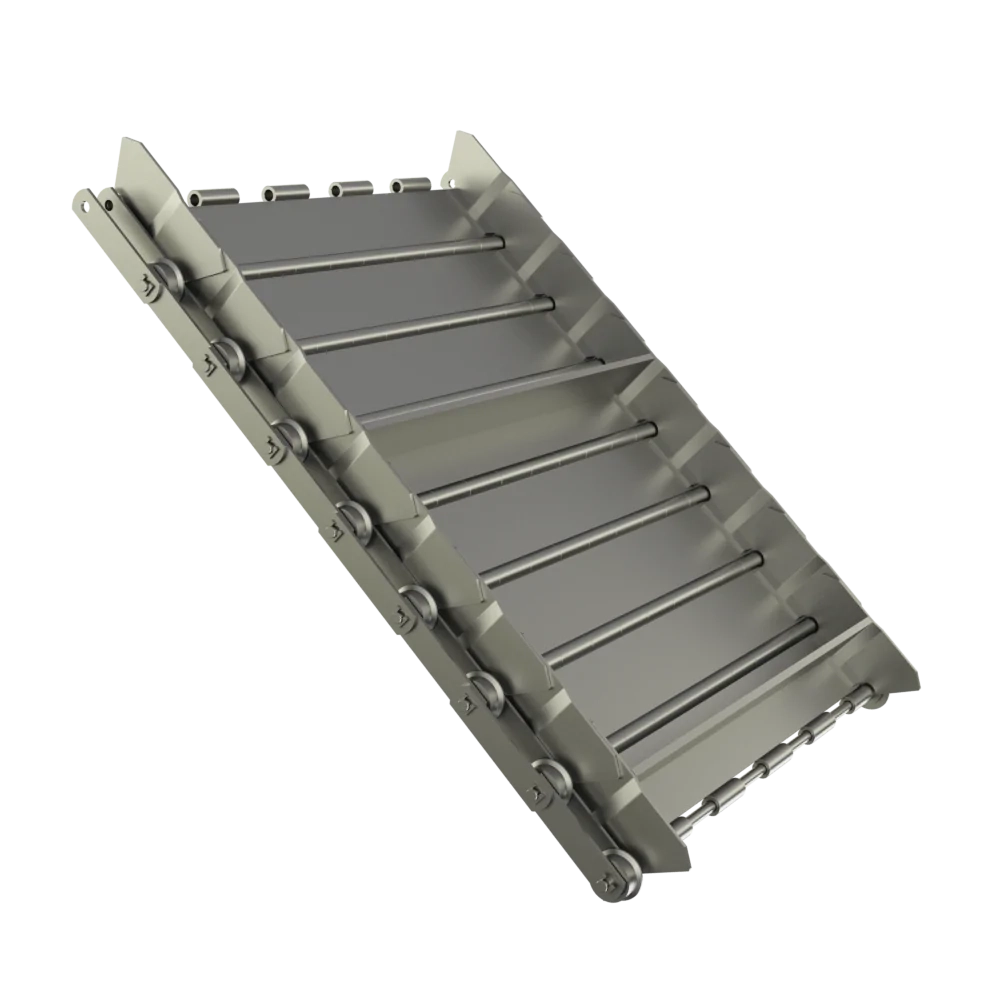
Plate made of smooth sheet metal
The hinged plate made of smooth sheet metal is used for transporting chips and piece goods such as forged parts.
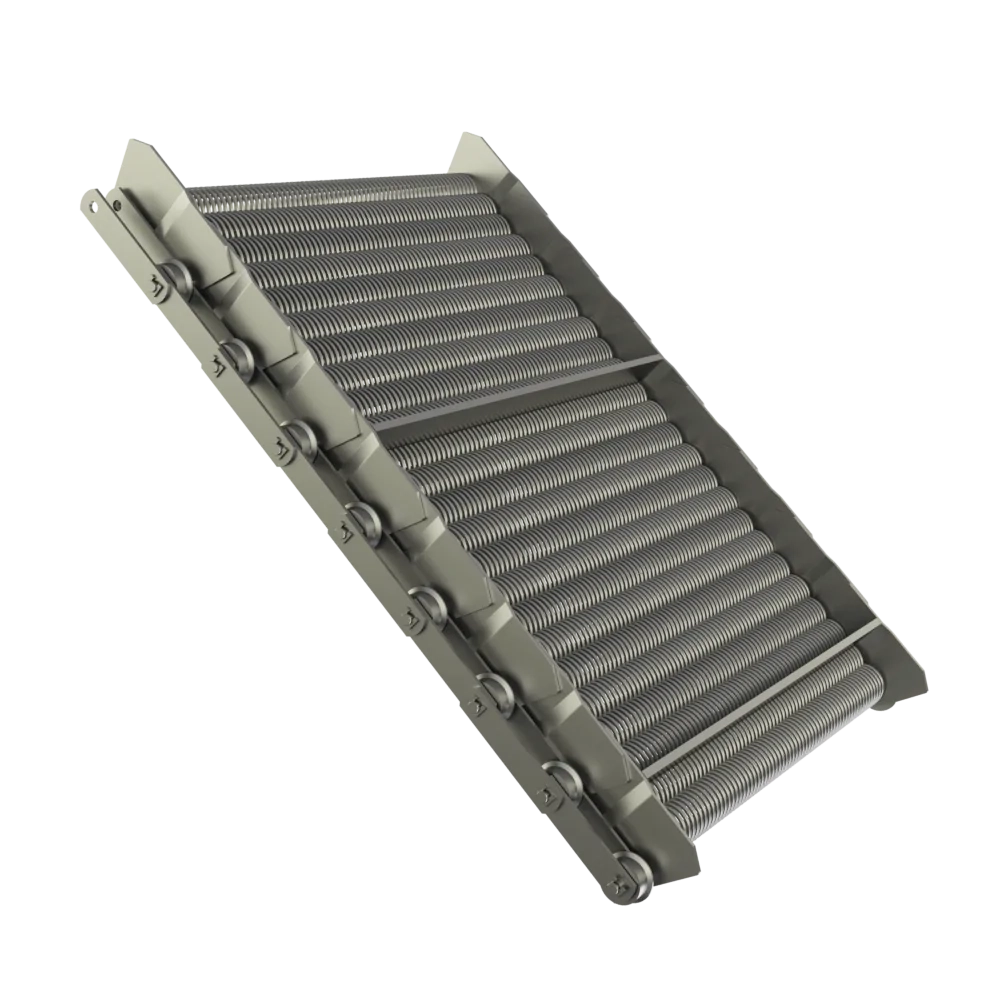
Wire webbing
Wire belt conveyors are an optimal solution for transporting hot forged and die-cast parts.
Questions & answers
FAQ: Frequently asked questions
Matching products