Chip conveyors for metalworking
Safe and Clean Transport of Chips and Other Materials
For short and long metal chips
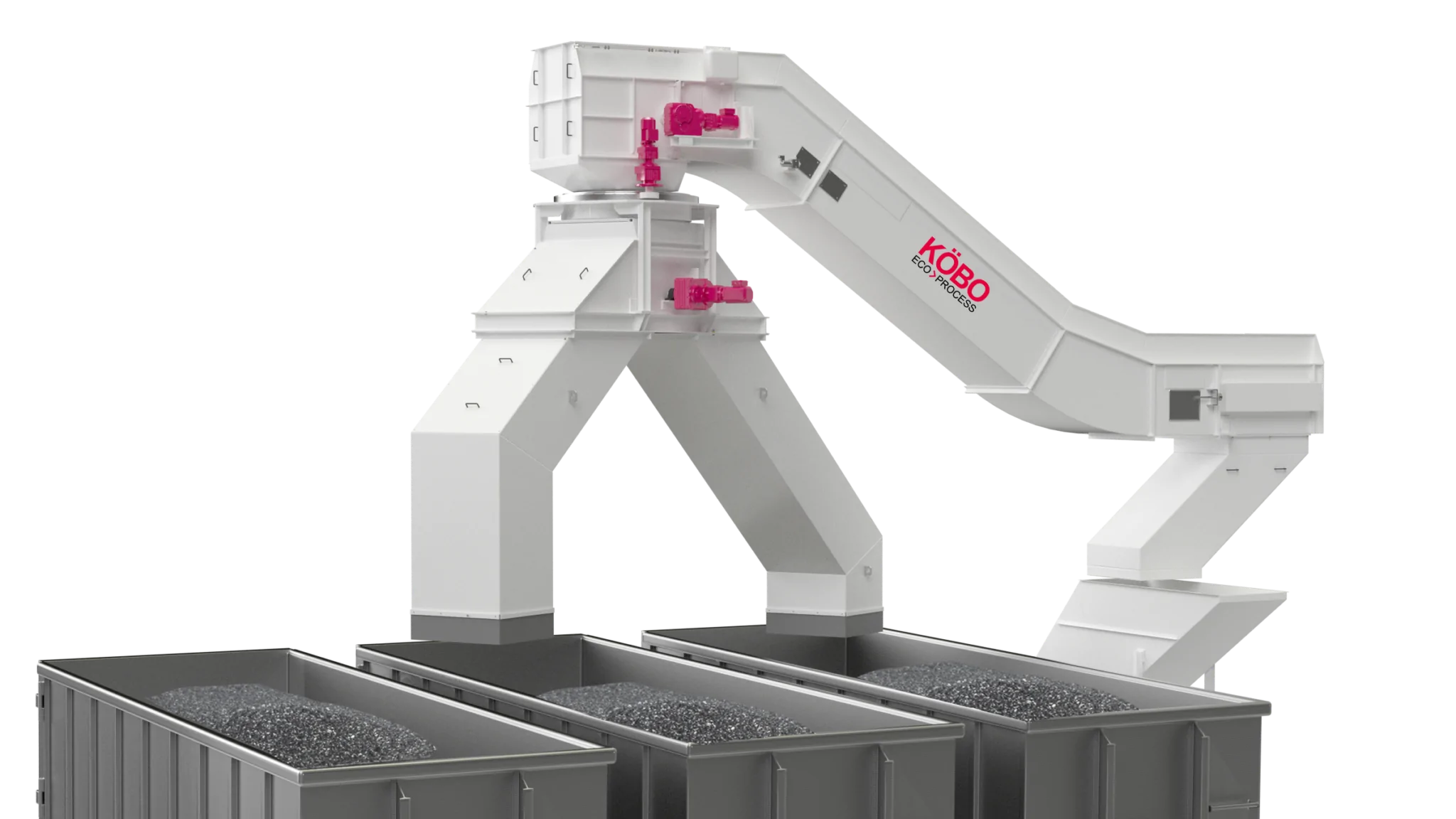
When chips build up in a machine, cleanup takes longer and machining can be interrupted. KÖBO ECO>PROCESS designs chip conveyors that carry metal chips to containers, collection points or downstream equipment. Depending on the conveyor design, coolant can drain separately from the chips. This helps keep material moving and reduces manual handling.
Lathes and Milling Machines
◆
Grinding Machines
◆
Automotive Industry
◆
METAL RECYCLING
◆
MECHANICAL ENGINEERING
Details
What does a chip conveyor do?
A chip conveyor automatically carries metal chips from machine tools or upstream machine bed conveyors to containers, centralized collection points or chip processing equipment.
In wet machining, coolant carried with the chips can drain off and enter the designated return or treatment system, depending on the conveyor design. The conveying method and configuration depend on factors such as chip shape, material, required throughput and installation conditions.
Some designs can also handle plastic chips, wood shavings or stamping waste. Suitability is assessed for each project.
Without controlled chip removal, several problems can arise:
➔
Irregular material flow: Chip buildup makes it harder to transfer material steadily to containers or downstream equipment.
➔
Chip buildup in the work area: Chips accumulate inside the machine, increasing the need for cleaning.
➔
Strain on coolant treatment: Chips that are not removed effectively can place an extra load on downstream tanks and initial separation stages.
➔
Machining downtime: Blockages in the chip collection area can interrupt production.
➔
More manual cleaning: Frequent cleanup takes time away from other work.
A properly designed chip conveyor reduces the need for manual chip removal and supports steady operation at individual machines and across connected production lines.
Conveyor types
Chip conveyors from KÖBO ECO>PROCESS
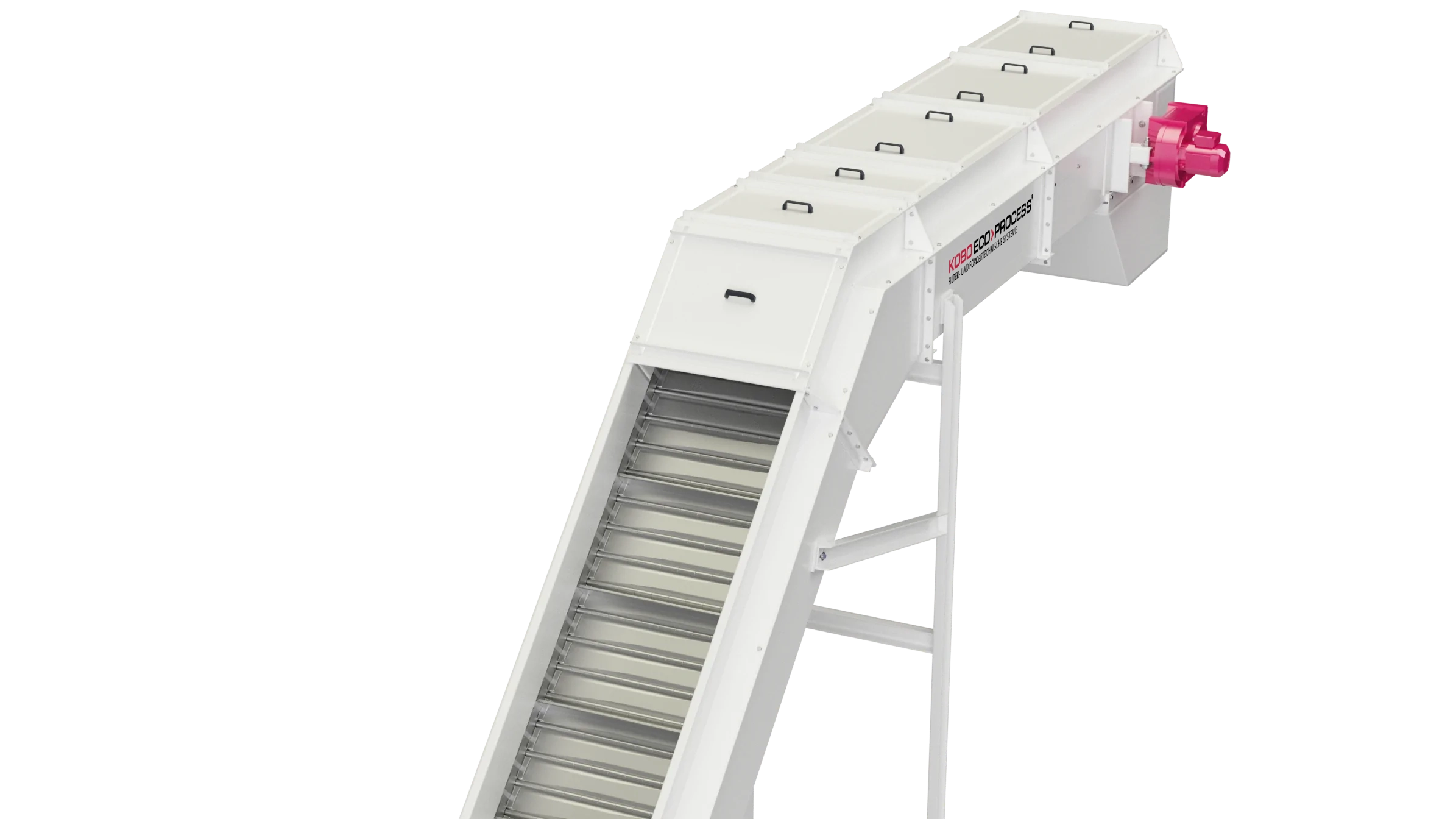
Scraper conveyor
Function
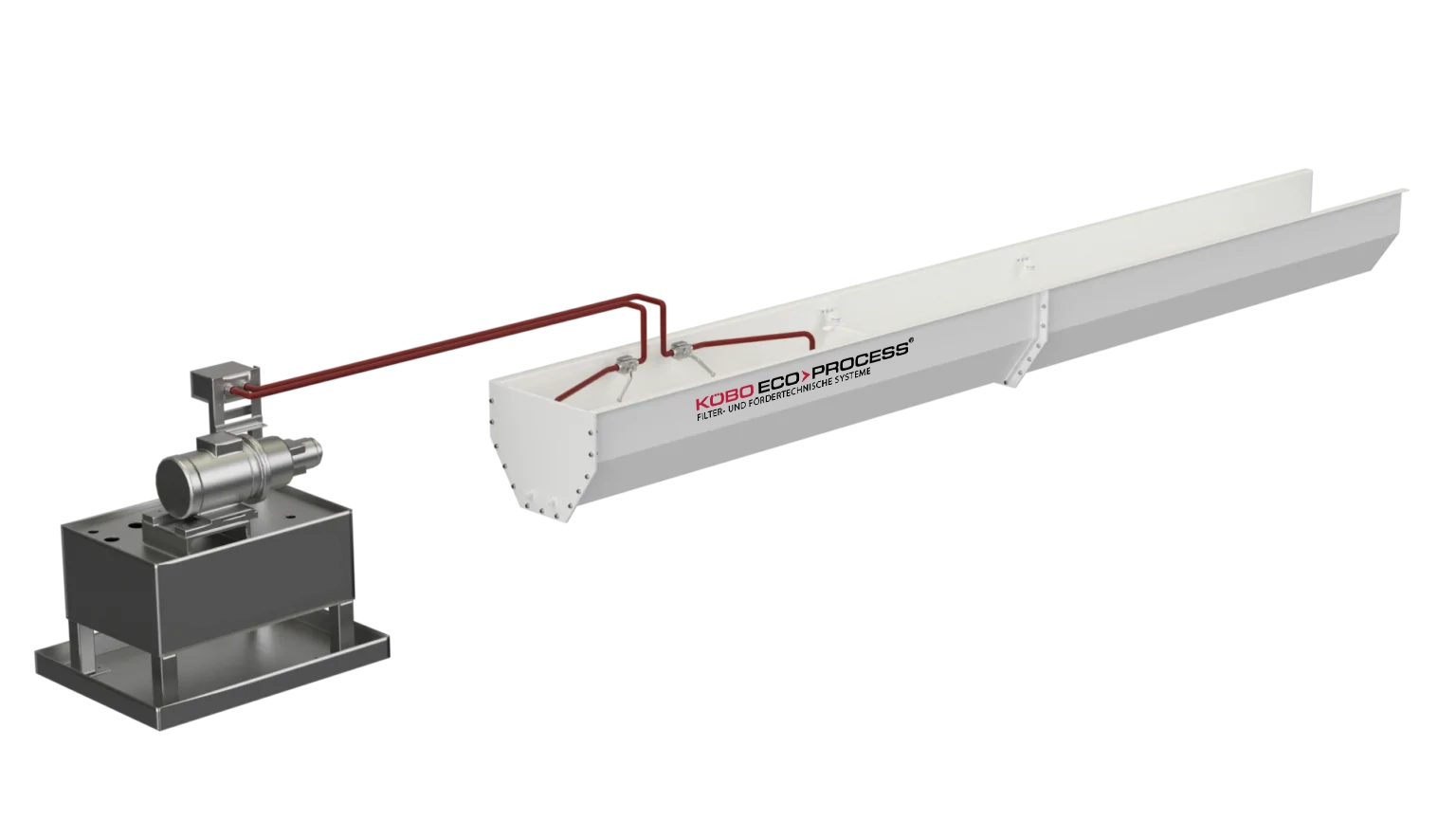
Flights attached to a conveyor chain run along the bottom of the trough and push short chips or sludge toward the discharge point. The design is robust and compact.
Applications
• Short and broken metal chips
• Grinding sludge
• Small parts from machining
Details
• Compact design
• Suitable for dry or wet chips, depending on the configuration
• Low installation height
• Accessible wear parts simplify maintenance
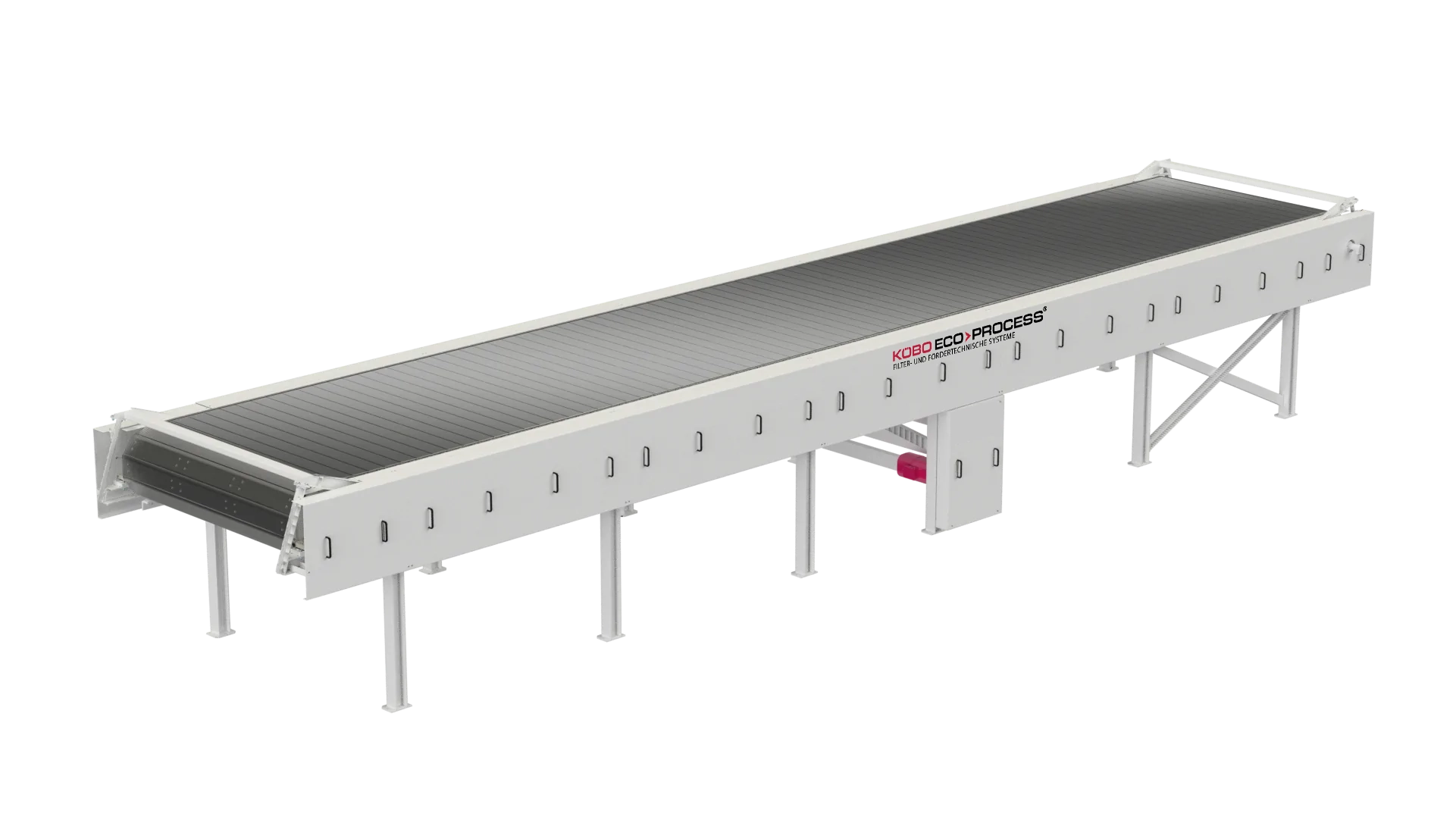
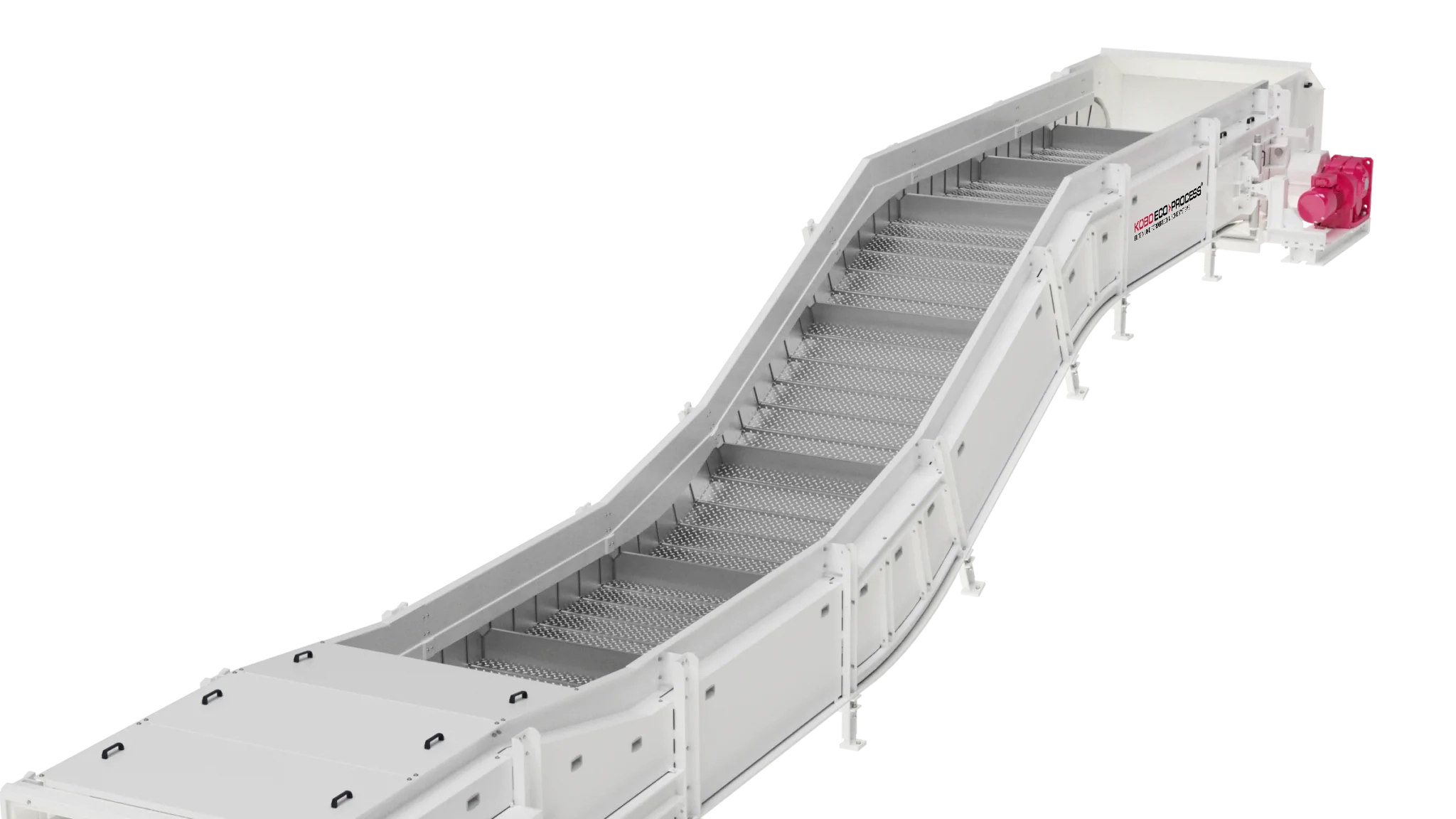
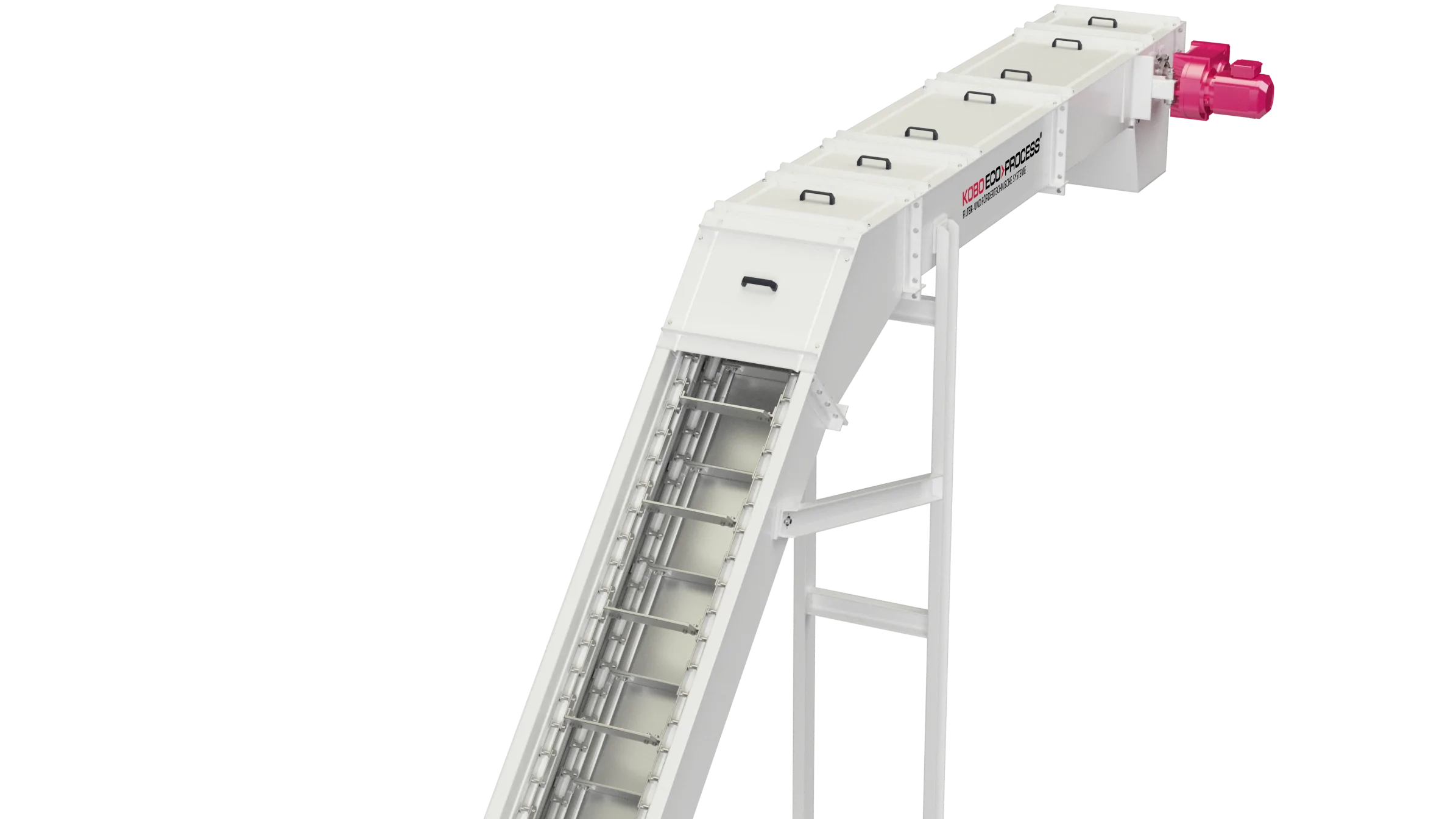
Hinged belt conveyor
Function
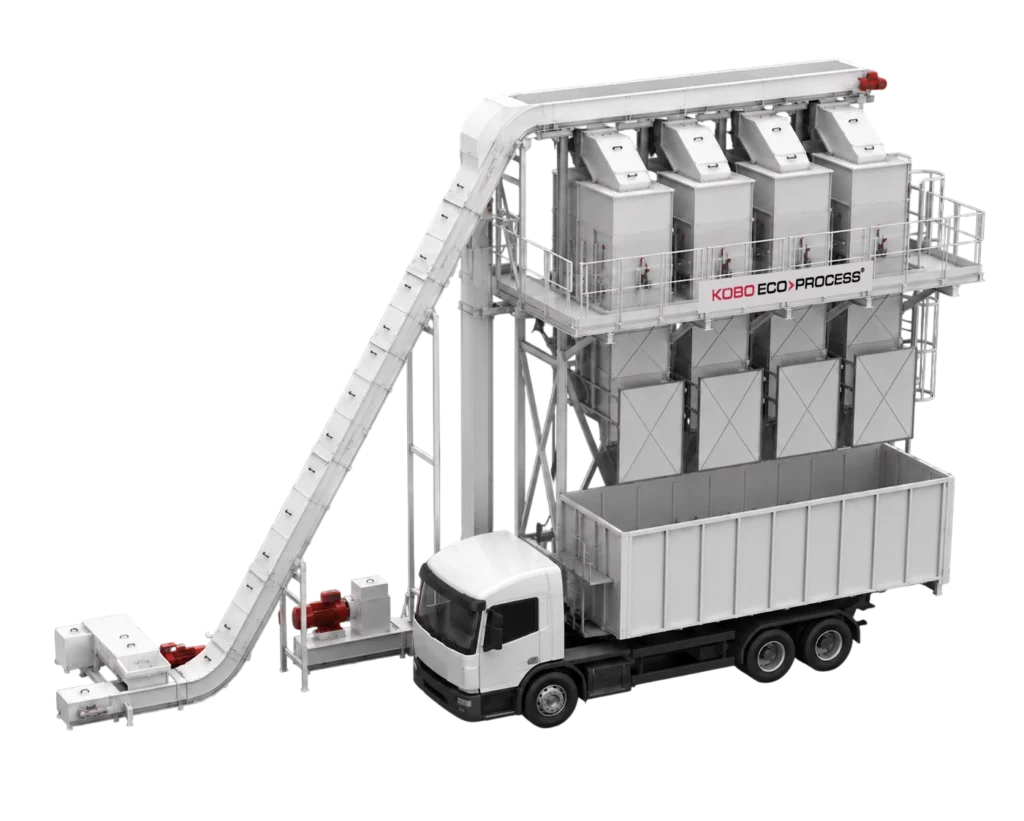
Interlinked steel plates form a continuous belt that collects and carries away long and tangled chips. The plate design and drive are matched to the material and load.
Applications
• Long metal chips, chip bundles and tangled chip nests
• Turning, milling and drilling of materials that produce long chips
• Mixed chip shapes, subject to assessment of the specific application
Details
• Reliable pickup of long chips
• High load capacity
• Can be sized for larger chip volumes
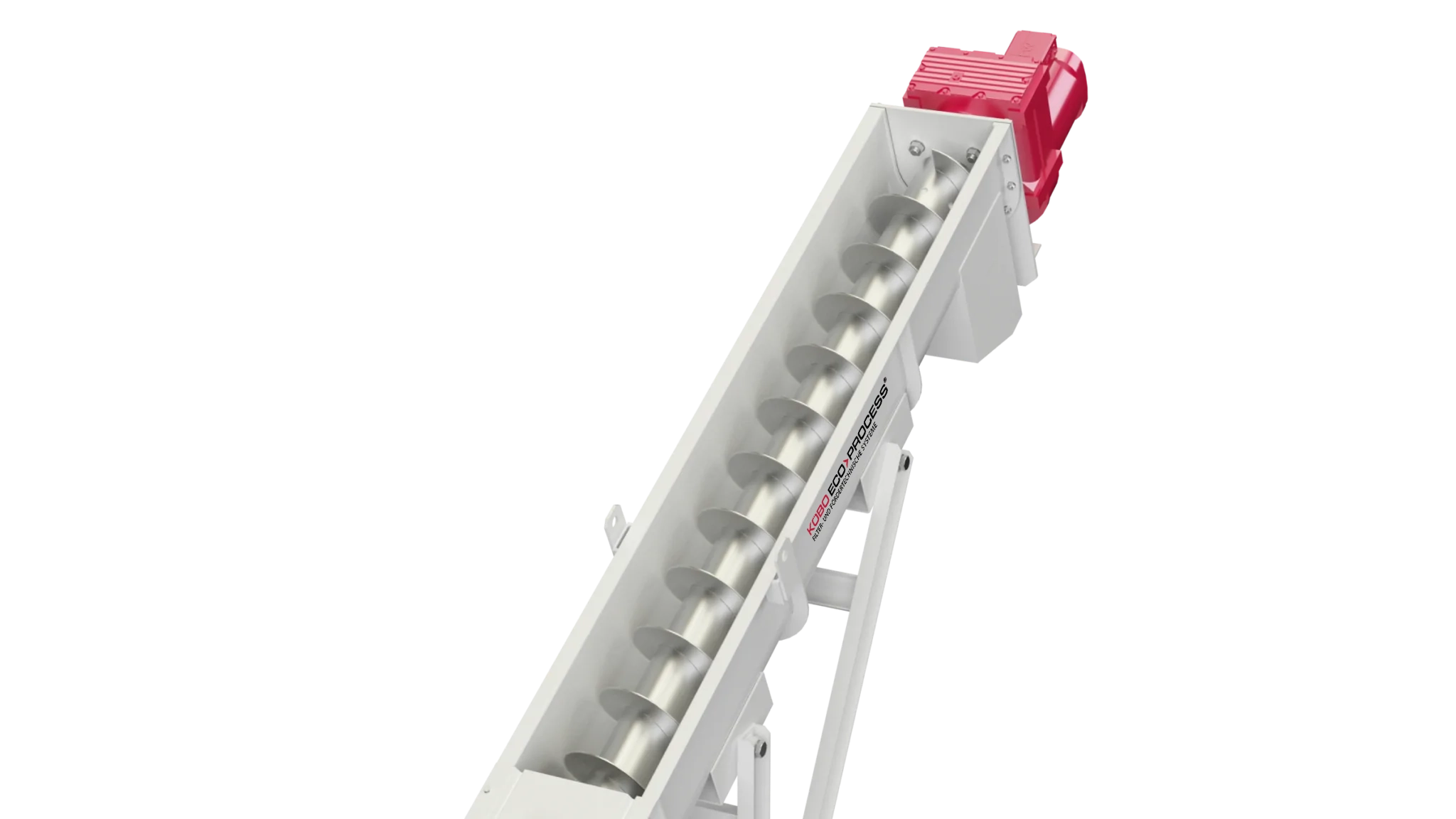
Screw conveyor
Function
A rotating screw moves chips along a trough or tube. The screw geometry, rotational speed and material properties determine the conveying rate.
Applications
• Short and broken metal chips
• Filter cake and suitable sludge
• Transfer of chips from extraction stations, chip storage bunkers or filtration systems
Details
• Compact design for tight installation spaces
• Horizontal or inclined installation
• Vertical conveying with a screw conveyor designed for vertical operation
For centralized chip handling, push-rod conveyors or a vacuum chip extraction system may also be suitable, depending on chip shape, conveying distance and plant layout.
Advantages of our chip conveyors
High conveying capacity
We size the conveyor cross section, drive and speed for the expected chip volume, including short periods of peak load.
Controlled coolant return
With a conveyor designed for wet chips, coolant can drain off and be collected during transport. The system layout accounts for returning or treating the collected coolant.
Durable construction
We select wear-resistant materials and components to suit the chip shape, material properties, loads and operating conditions.
Compact installation
Our chip conveyors can be built with a low profile for tight spaces. We adapt the conveyor route, infeed and discharge height to the available space.
Safer operation
Automated chip removal reduces the need to handle sharp chips manually. Covers, suitable transfer points and guards help support safe operation.
Easy access for maintenance
Accessible drives and wear parts make inspection and maintenance easier. Replaceable components allow repairs to focus on the areas subject to wear.
Selection
Which chip conveyor is right for your production?
The choice of the right chip conveyor depends on several factors:
➔
Chip shape: Scraper conveyors are often suitable for short and broken chips or sludge. Hinged belt conveyors can handle long chips and tangled bundles. Screw conveyors can be a good choice for suitable short chips where discharge space is limited.
➔
Chip volume: Required throughput depends on the volume and bulk density of the chips, including short peaks. We size the conveyor cross section and drive accordingly.
➔
Space and maintenance access: Installation height, conveying distance, incline, discharge height and access for maintenance affect the layout. A compact screw conveyor can be an option where space is tight.
➔
Process conditions: The material, moisture and coolant content affect the design. For wet machining, we also consider coolant drainage and connections to filtration or return systems.
KÖBO ECO>PROCESS uses these criteria to design a chip conveyor around your machine, available space and production requirements.
For more guidance, see: Which chip conveyor is right for long and short metal chips?
Collaboration
Why choose KÖBO ECO>PROCESS for chip conveyors?
➔
Custom system design: We consider chip volume, coolant content, conveying distance and available space to design a conveyor that fits your machine and process.
➔
Service and spare parts: Our technicians install the system at your site and train your staff in operation and maintenance. We supply spare parts matched to your system.
➔
Manufacturing and quality checks: We build our conveyor systems in cooperation with experienced partners. Each module is checked against defined criteria, and the results are documented. Short conveyors can be tested before delivery when needed.
➔
Industry experience: We have implemented chip conveyors for the automotive industry, recycling, aviation and machine tool manufacturing. We draw on that experience when designing new systems.
APPLICATIONS
Typical applications of chip conveyors
➔
Lathes and milling machines: Removal of short, long or tangled metal chips using a conveyor matched to the chip shape.
➔
Metal recycling and chip recovery: Transport of metal chips to collection points, storage bunkers or downstream recovery equipment.
➔
Grinding machines: Removal of fine grinding chips and sludge with a conveyor designed for these materials.
➔
Machinery and plant engineering: Integration of chip conveyors into machining centers and production areas that handle different materials and chip shapes.
➔
Automotive manufacturers and suppliers: Automated chip removal from individual machine tools and connected production lines.
➔
Chip processing: Transfer of metal chips to storage bunkers, shredders, centrifuges or other processing equipment.
COST-EFFECTIVENESS
Costs and payback of chip conveyors
The cost of a chip conveyor depends on its design, length, and conveying capacity. Other factors that influence the cost include the conveying cross-section, material selection, drive system, control system, and integration into existing systems.
The key factor is the economic benefit: Automated chip removal can reduce the effort required for manual clearing, container changes, and internal transport. A coordinated coolant drainage and recovery system can also limit fluid loss.
How quickly the investment pays for itself depends on your current waste disposal processes, labor costs, downtime costs, and the specific scope of the system.
Your chip conveyor from
KÖBO ECO>PROCESS
Are you looking to design a new chip conveyor or upgrade your existing system?
Then speak directly with our technicians. We'll develop a solution for you that's tailored to the chip shape, throughput, and installation conditions.
FAQ
FAQ: Frequently Asked Questions About Chip Conveyors
Related Products