
Apron conveyor
For stamped parts, forgings and castings
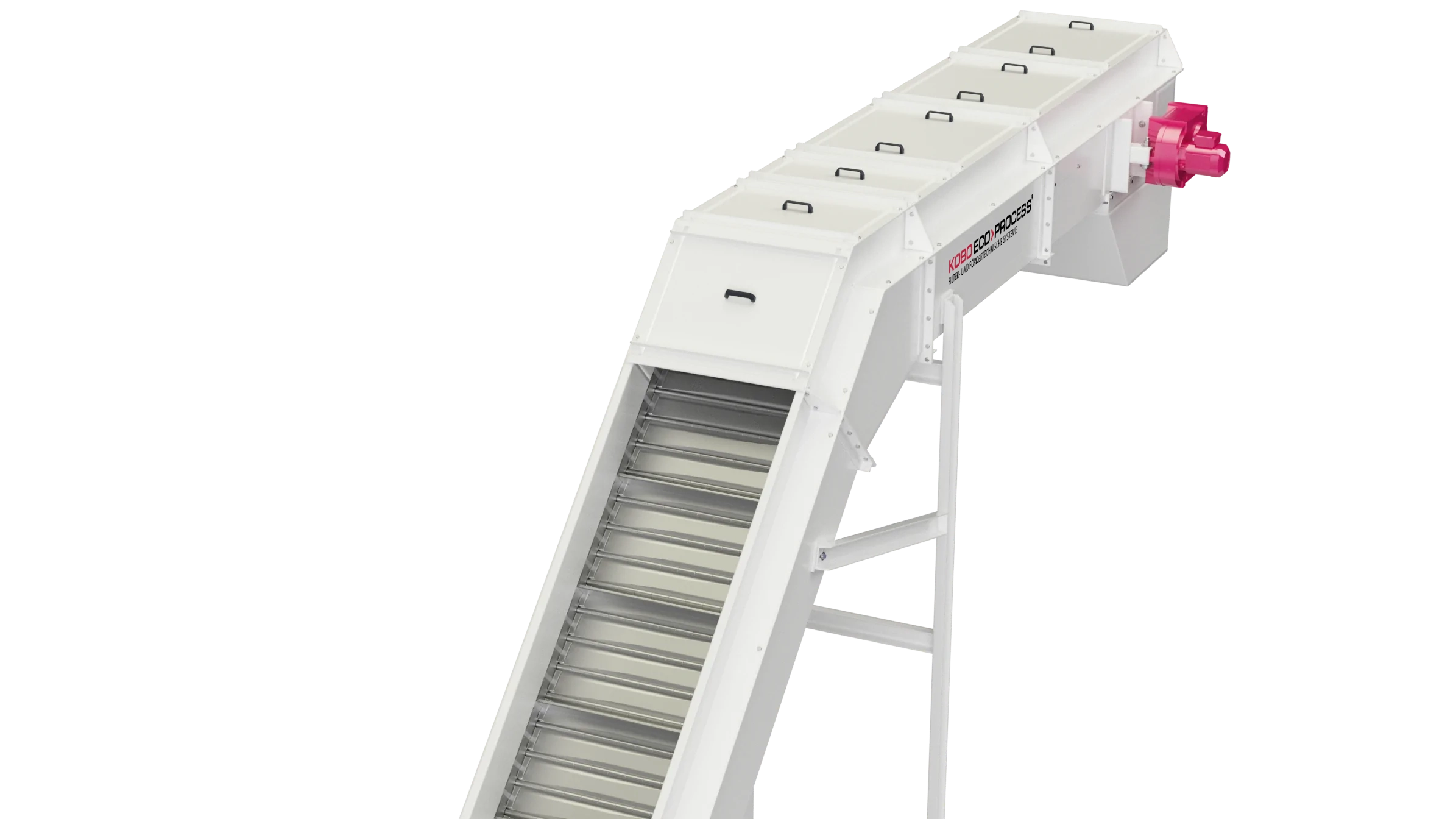
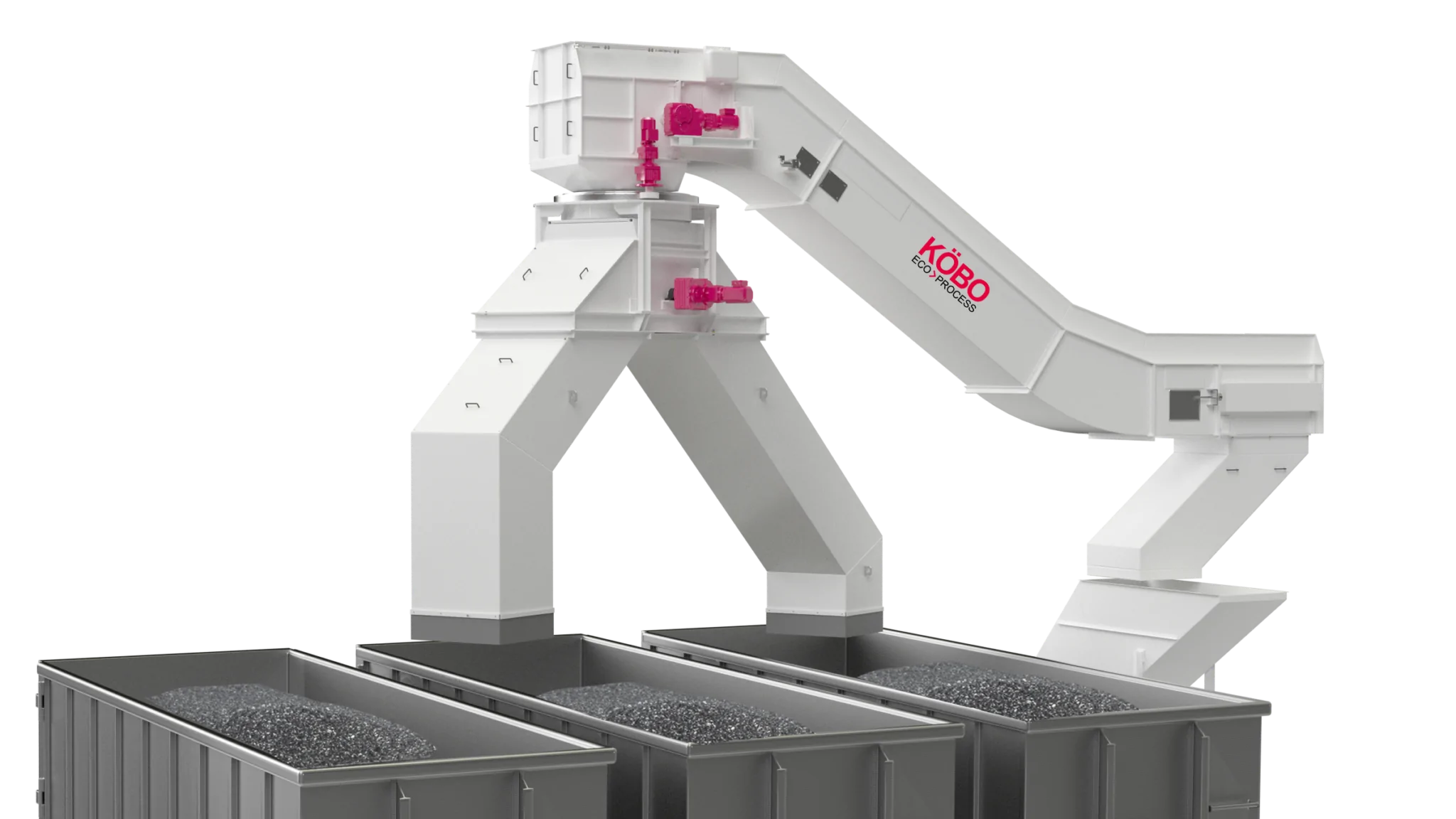
Apron conveyors from KÖBO ECO>PROCESS reliably transport components, stamped parts, sheet metal scrap, and cold or warm forgings and castings between production, machining and transfer stations.
The interconnected metal links form a robust conveying surface. The belt design is adapted to the material being conveyed, including its temperature, weight and surface characteristics.
STAMPING & FORMING
◆
AUTOMOTIVE
◆
MECHANICAL ENGINEERING
◆
FOUNDRIES
◆
METALWORKING
Overview
Apron conveyors for industrial material handling
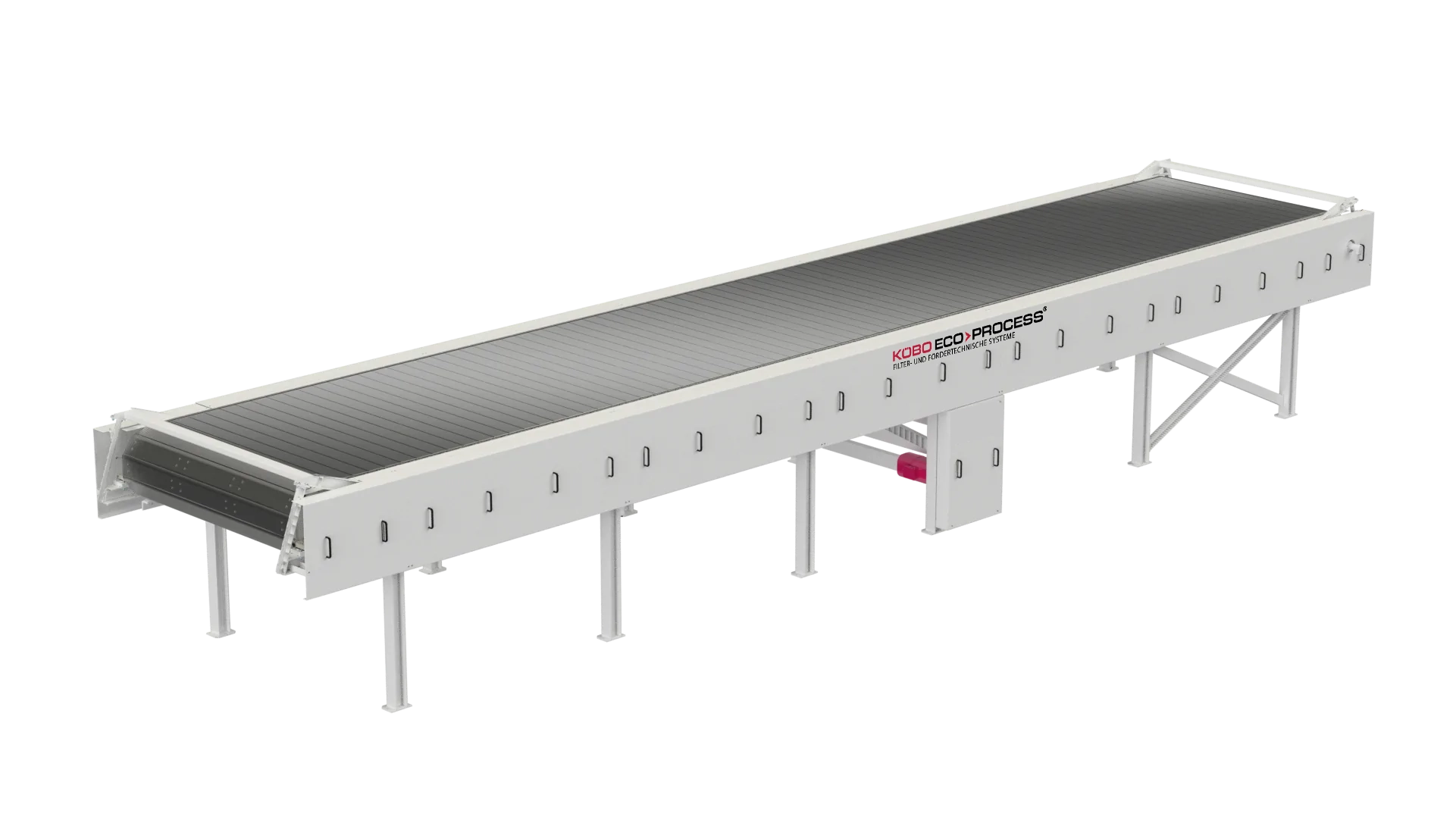
Apron conveyors continuously transport components, workpieces and production scrap along horizontal or inclined routes. The belt consists of interconnected metal links or plates driven by chains on either side.
A solid, robust conveying surface is particularly suitable for sharp, oily or warm materials that place high demands on conventional belt conveyors. Depending on the application, the belt can use smooth, textured or troughed plates, or an open mesh design.
Apron conveyors can operate as standalone units or as part of an integrated conveyor system. Typical tasks include feeding components into and out of machining equipment, removing stamped parts from presses and transferring forgings and castings to the next station.
Depending on the industry and design, this type of conveyor is also known as a hinged belt conveyor. This page focuses on the apron belt as a robust conveying surface for components and other individual items.
DESIGN AND FUNCTION
Apron conveyor design and operation
Design
➔
Standardised conveyor cross sections with a choice of usable belt widths
➔
Material transfer via chutes or designated discharge points
➔
Special conveyor chains with track rollers or flanged rollers
➔
Shaft-mounted geared motor
➔
Steel belt plates available in different designs
➔
Floor or ceiling mounting
➔
Horizontal or inclined conveyor routes
How it works
The material rests on a continuous belt made up of interconnected metal links or plates. Cross rods join the plates so they can articulate, and two conveyor chains run along the sides.
Sprockets drive the chains and move the belt along the conveyor route. The upper run carries the material to the designated transfer or discharge point.
Depending on the material and process, a variable frequency drive can adjust the conveyor speed to match the flow of material to the equipment or production steps before and after the conveyor.
GOODS TO BE TRANSPORTED
What can an apron conveyor transport?
✓
Stamped parts, punching slugs and sheet metal cutouts
✓
Production scrap from stamping, pressing and forming
✓
Fine sheet metal scrap and stamping waste
✓
Metal chips with or without coolant
✓
Cold and warm forgings
✓
Plastic parts and production scrap
✓
Die castings and other cast parts
✓
Components and residual materials from composite machining
✓
Components and workpieces between machining stations
✓
Other individual items and bulk materials, subject to technical review
✓
Metal parts with sharp edges or oily surfaces
APPLICATIONS
Applications for apron conveyors
✓
Stamping and forming: Remove stamped parts, punching slugs, sheet metal cutouts and offcuts from presses and production lines and convey them to the next station.
✓
Forging: Transport cold or warm forgings between presses, cooling sections, inspection stations and further processing steps.
✓
Foundries and die casting: Remove cast and die cast parts and transfer them to cooling, inspection or finishing processes.
✓
Automotive manufacturing: Convey components, stamped parts and production scrap within integrated manufacturing and forming processes.
✓
Mechanical engineering: Feed workpieces into and out of machining equipment and connect successive production steps.
✓
Metalworking: Transport sheet metal parts, metal components, production scrap and, depending on the belt design, metal chips.
✓
Recycling: Transfer sheet metal offcuts and metal production scrap to collection or processing systems.
✓
High temperature applications: Transport warm forgings or die castings using a belt designed for the operating temperature.
VERSIONS
Plate and belt options for apron conveyors
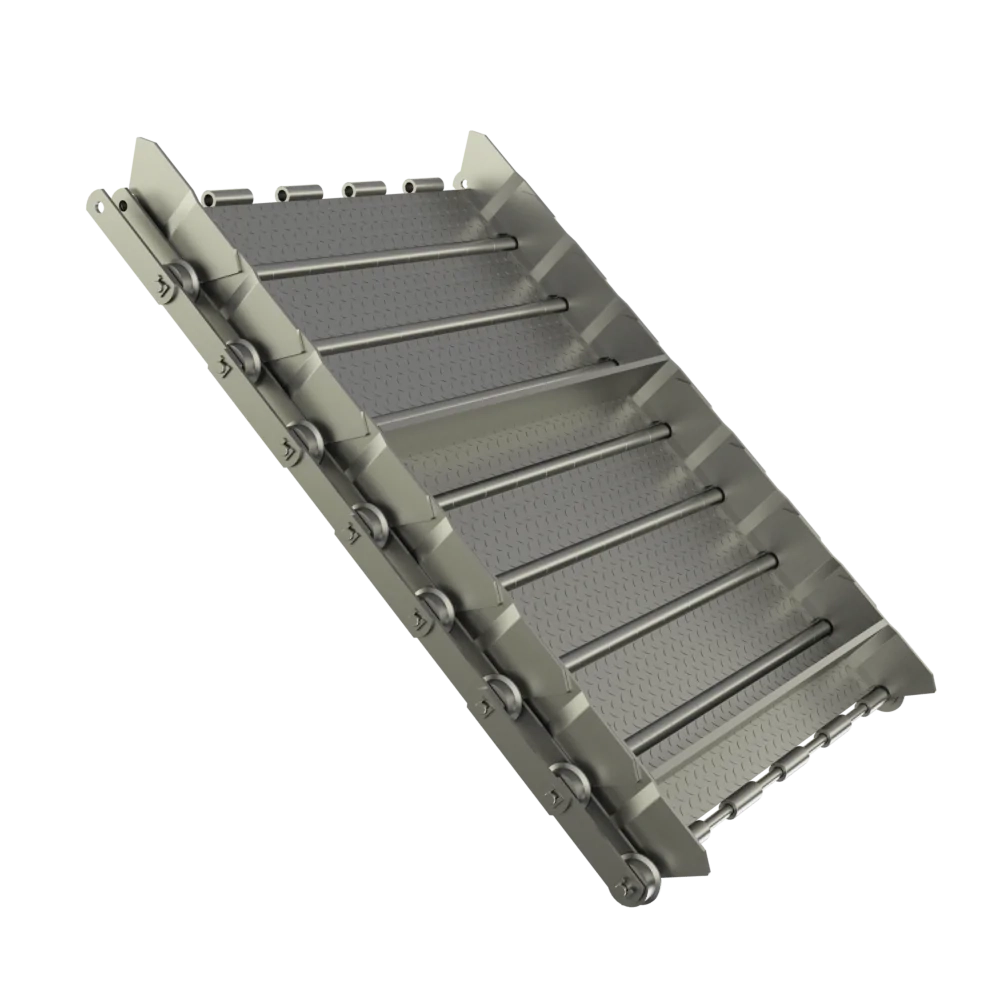
Tread plate
The textured surface is particularly suitable for sheet metal offcuts, punching slugs and stamping waste. When the material is coated with oil, the surface texture can help reduce the adhesion of smaller parts to the belt plates.
Depending on the application, dimpled or embossed sheet metal can be used instead.
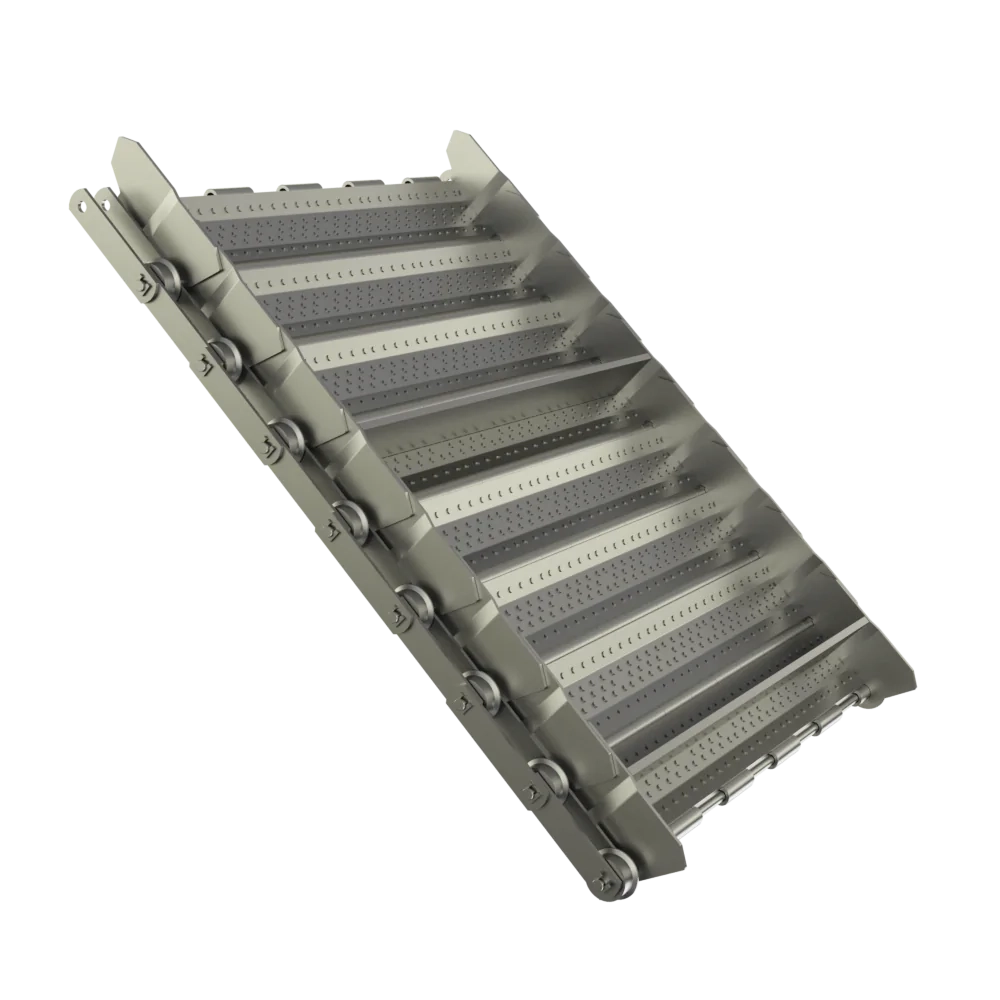
Troughed plate
The troughed profile increases plate stiffness. The clearance between the plate and the tubular sleeve can be matched to the material being conveyed.
This design is particularly suitable for small stamped parts and production scrap that require controlled clearances and a stable conveying surface.
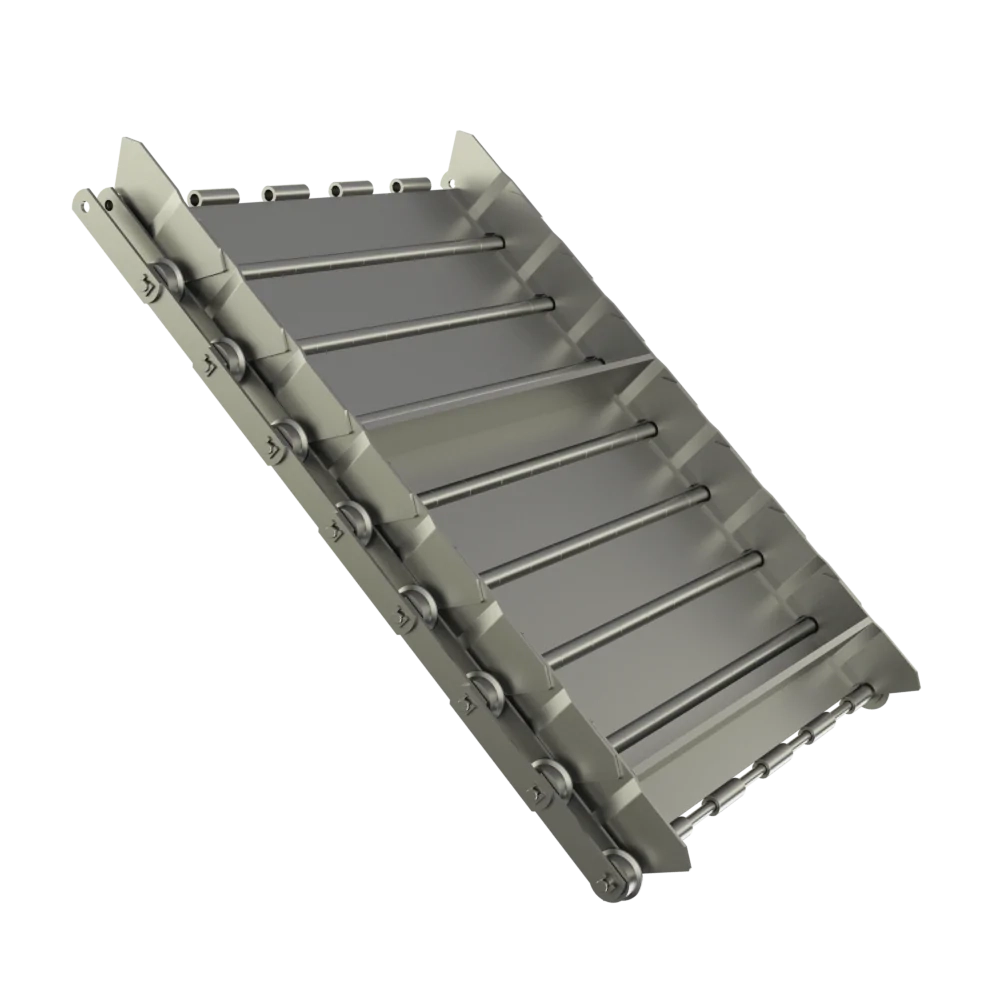
Smooth plate
The smooth plate provides a largely flat conveying surface for components, workpieces and individual items. Typical applications include conveying forgings, castings and other metal parts.
Plate dimensions and thickness are selected according to the weight, temperature and characteristics of the material.
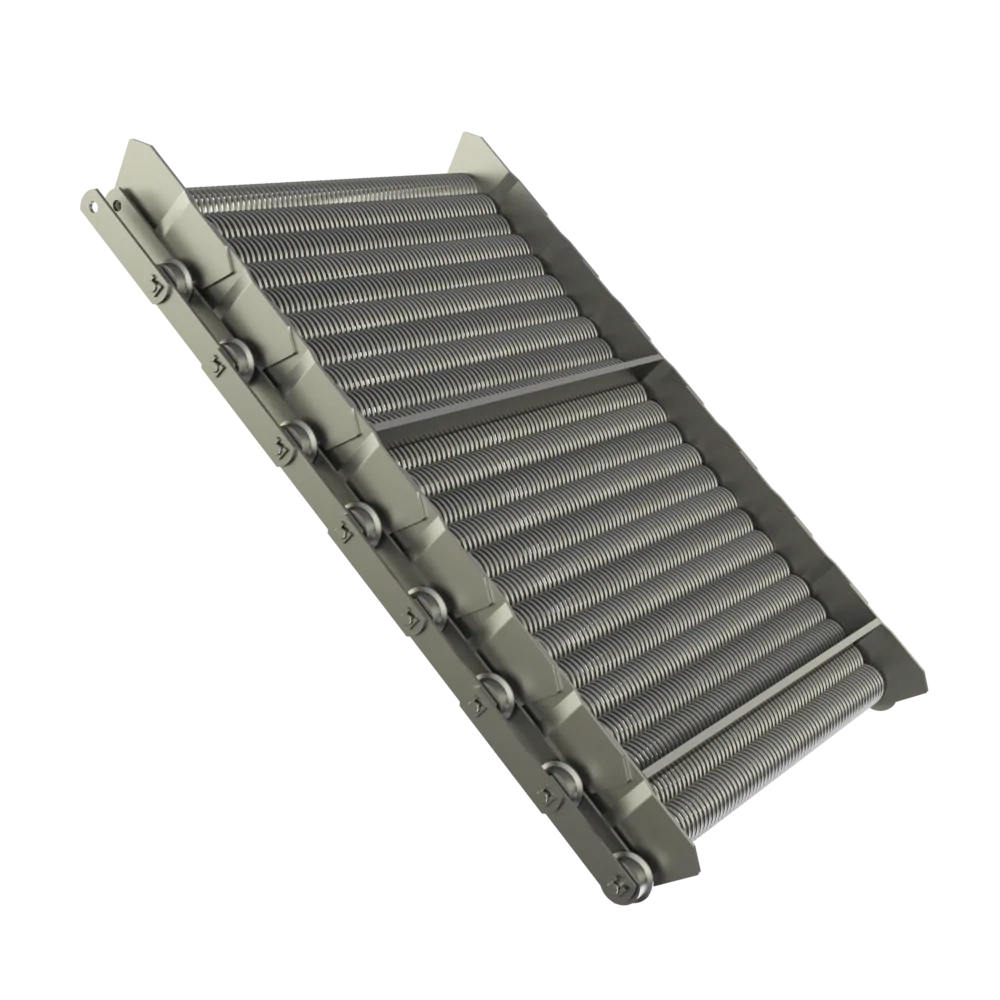
Wire mesh belt
A wire mesh belt is an alternative for applications that require an open conveying surface and good heat dissipation. These include the transport of hot forgings and die castings.
Suitability depends on the temperature, weight and process conditions.
Specifications
Apron conveyor specifications
Typical materials
Stamped parts, punching slugs, sheet metal offcuts, components, workpieces, forgings, castings, fine sheet metal scrap, metal chips and other individual items or bulk materials
Width and usable belt width
100 to 1,100 mm. Greater widths on request.
Length
Up to 100 m per conveyor
Incline angle
30°, 45° or 60°. Other angles subject to technical review.
Belt Plate Thickness
1.5 to 5 mm. Thicker plates are possible depending on the material and load.
Plate and Belt Options
Tread plate, troughed plate, smooth plate or wire mesh belt
Plate Pitch
38.1, 63, 125 or 160 mm
Drive
Shaft-mounted geared motor
Mounting types
Floor or ceiling mounting
Conveyor speed
Adapted to the material flow and adjacent production processes for each project
Benefits at a glance
Robustness and durability
Durable materials and components designed to resist wear support a long service life and reliable operation, including when handling sharp, oily or warm materials.
Adaptability
Width, length, incline angle, plate pitch and surface finish can be matched to the material, throughput and installation conditions.
High conveying capacity
Apron conveyors continuously move components, stamped parts and other individual items between production and machining stations. Conveying capacity is specified to suit the process.
Easy maintenance
Accessible chains, belt plates and drive components simplify inspection, maintenance and the replacement of wear parts.
Cost efficiency
Automated conveying reduces manual handling and supports continuous, economical production.
Comprehensive service
KÖBO ECO>PROCESS supports you from planning and design through installation and commissioning to maintenance and spare parts supply.
Tailored solutions
We configure apron conveyors to suit the material, required capacity, conveyor route, equipment interfaces and available space.
Need help choosing a conveyor?
We are happy to answer your questions about apron conveyors.
CONTACT
An apron conveyor suited to your application
We assess the material, weight, temperature, throughput, conveyor route and installation conditions. We then design an apron conveyor for your application, either as a standalone unit or as part of an integrated conveyor system.
Enquire about an apron conveyorRelated Products
Related conveyor products
FAQ